How to Meal Prep for the Week: Practical Ways to Beat Daily Cooking
By:Author:Flame Diet Editorial
Updated on:October 18, 2026
- Does Meal Prepping Actually Save You Time Each Week
- Batch Cooking Versus Ordering in: Weighing the Two
- Why Batch Prepping Beats Cooking From Scratch Every Night
- Adapting Weekly Meal Prep to Different Schedules
- Making Weekly Prep Work With a Real Routine
- The Myth That Prepped Meals Melt Fat Overnight
- Turning Meal Prep Into Your Weekly Shortcut
- Getting Your First Prepped Week Off the Ground
Meal prepping for the week means cooking in batches - once or twice - so you have food ready instead of starting from zero every evening. The direct answer: pick two or three cooking sessions, make more than one meal's worth each time, and store it so future-you doesn't have to decide anything hungry.
The mechanism is simple. Decision fatigue and time pressure are what push people toward takeaways and whatever's fastest, not a lack of willpower, so removing the decision at 7pm removes the problem.
This article covers whether prepping actually holds up, how it compares to cooking fresh daily or ordering in, who it suits and how to bend it to a real schedule, and how a plan built around food you already like makes the whole thing less of a chore.
Does Meal Prepping Actually Save You Time Each Week
Yes, and the arithmetic is straightforward rather than theoretical. If cooking a single dinner from scratch takes 35 minutes of active work most nights, that's roughly 245 minutes across a seven-day week just on dinners.
Batch cooking for two hours on a Sunday, covering five dinners, drops that weekly active-cooking time to around 120 minutes total - the two-hour session plus a few minutes of reheating each night.
That's not a guess about your exact numbers, it's just what happens when five separate cooking sessions get folded into one or two. The other honest part: prepping doesn't make food healthier on its own, it just makes the better option the easy option, which is where most of the real benefit sits.
There's also a shopping-trip saving worth counting. One planned grocery run instead of three or four reactive ones during the week cuts both time at the shop and the impulse buys that tend to happen when you're hungry and deciding dinner on the spot.
Batch Cooking Versus Ordering in: Weighing the Two
Most people choosing how to handle weekday food are really deciding between three things: cooking fresh every night, ordering in, or batch prepping once or twice a week.
| Factor | Cooking Fresh Daily | Ordering In | Batch Prepping |
|---|---|---|---|
| Time per weekday | 30 to 40 minutes | 5 minutes ordering | 5 to 10 minutes reheating |
| Weekly decisions made | 7 separate choices | 7 separate choices | 1 to 2 choices |
| Control over ingredients | Full control | Little control | Full control |
| Cleanup frequency | Daily | Minimal | 1 to 2 sessions |
| Consistency over a month | Drops when busy | Easy but costly | Holds up well |
None of these is wrong on its own, but the decisions column is the one that matters most over a real month, not just a good week.
Why Batch Prepping Beats Cooking From Scratch Every Night
Cooking fresh every night sounds ideal and works fine for exactly as long as life stays calm, which is rarely more than a few days in a row.
The adherence problem isn't the cooking itself, it's that fresh-every-night asks you to make the same good decision seven times a week, and one bad night at 8pm can undo the whole plan for that day.
Prepping removes most of those decision points in one go. You make the call once, on a day when you have energy and time, instead of seven times on days when you might have neither.
That's the whole case for the easier route - not that it's superior food, but that it survives a Tuesday when the day went sideways, which is exactly when plans usually fall apart.
Adapting Weekly Meal Prep to Different Schedules
If You're New to Prepping
Start with just one meal, not all three - prep lunches only for the first week and let dinner stay flexible while you get used to the rhythm. Trying to batch every meal in week one is the fastest way to quit by Wednesday.
If Your Week Is Packed
Two shorter sessions - say 45 minutes on Sunday and 30 on Wednesday - often fit a busy schedule better than one long Sunday marathon. Splitting it also means fresher food by the end of the week, since nothing sits for six days straight.
If You're Cooking for One
Single-portion freezing solves the problem of a recipe making five servings when you only want two - freeze the extras in individual containers and pull one out as needed. This also means variety: three different frozen meals beat eating the same dish five nights running.
If You're Older or Managing Joint Discomfort
Standing at a counter chopping for two hours isn't realistic for everyone, so breaking prep into short 15 to 20 minute stretches across a couple of days spreads the physical load without losing the benefit. A slow cooker or oven-based batch recipe also cuts down on the standing and active chopping time.
Making Weekly Prep Work With a Real Routine
The theory is easy, the actual week is where it gets tested - groceries sitting unused, containers piling up unwashed, the same three recipes on repeat until you're sick of them.
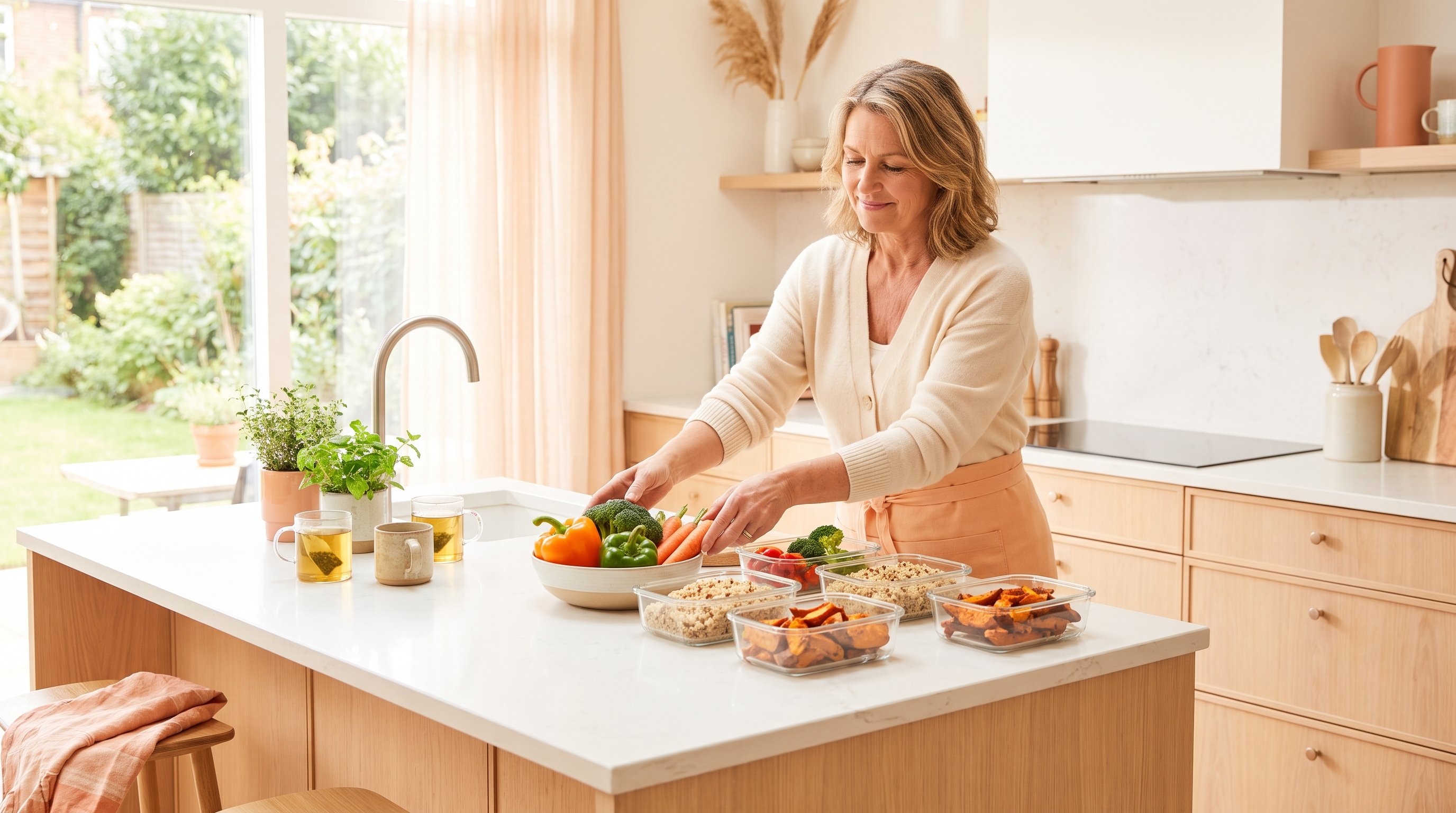
What tends to keep it going is having the meals themselves already sorted, so prepping becomes a cooking task rather than also a planning task done hungry and tired on a Sunday afternoon.
This is where a customized anti-inflammatory meal plan built around food you already like earns its keep - Flame Diet lays out what to cook ahead of time, so the Sunday session is just execution, not a fresh round of decisions about what to make.
Pairing that with a way to keep water, steps and weight logged in one place means the prepping habit sits alongside the rest of the week instead of competing with it for attention.
The Myth That Prepped Meals Melt Fat Overnight
No single meal, prepped or otherwise, targets fat in one area of the body or produces results overnight - that's not how any of this works, and it's worth saying plainly rather than hinting around it.
Prepping changes what you eat across a week by making the better choice the default one, which is a consistency tool, not a shortcut around biology.
The honest version: a steady, sustainable calorie deficit held over time is what moves the needle, and prepping is simply one of the more reliable ways to hold that deficit without relying on willpower every single night.
Timing of results varies by person and circumstance, so it's more useful to focus on whether the habit is holding up week to week than on how fast anything is happening.
Turning Meal Prep Into Your Weekly Shortcut
Once the prepping habit is in place, the bottleneck usually shifts to a different question: what exactly do you cook, and does it actually hold up by day four in the fridge?
Flame Diet answers that with a tailored-for-you anti-inflammatory meal plan, so the recipes you're batching are already built for your preferences rather than pulled from a generic list that assumes everyone eats the same way.
The app also brings in light, guided workouts, progress tracking for weight, water and steps, and short lifestyle challenges, so the prepping habit sits inside a wider routine instead of standing alone and fizzling out after a fortnight.
Nutrition and health guides are included too, which helps if you want the reasoning behind the swaps rather than just a list of what to cook.
Manage Weight with Personalized Flame Diet
Make it simple with a plan made for you
Getting Your First Prepped Week Off the Ground
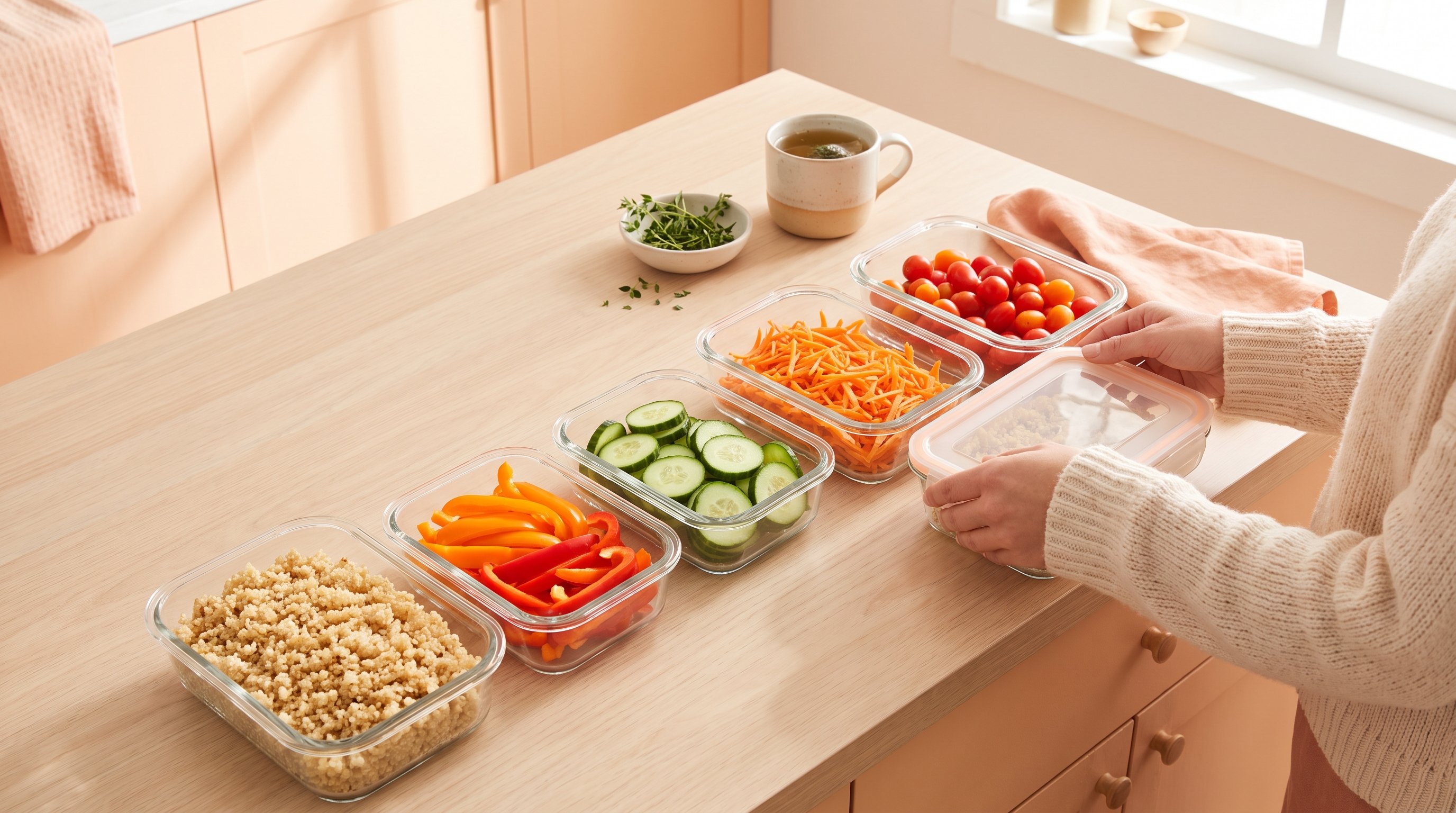
Pick one meal, one or two cooking sessions, and five containers - that's the whole starting kit, nothing more elaborate needed for week one.
Expand from there once it feels manageable, and let the recipes themselves come from somewhere customized to you, which is exactly what a customized meal plan is built to do.
FAQ
Prepping itself doesn't lose weight, it just makes it easier to stick to a sensible eating pattern across a full week instead of just a good day here and there. The actual change comes from the food choices and portions held consistently, which prepping supports by removing daily decision-making.
It can be if you cook one giant batch of the same dish, which is the usual mistake - prepping two or three different meals and freezing some portions avoids the repetition. Rotating recipes week to week also keeps it from feeling like the same five days on loop.
Thirty minutes twice a week, split into smaller tasks like chopping vegetables one evening and cooking proteins another, still counts and beats cooking from scratch seven separate times. A customized meal plan through Flame Diet can also cut planning time down, since the what-to-cook decision is already made for you.
Usually it's because the containers pile up, the recipes get repetitive, or the plan was too ambitious from the start, trying to batch every single meal at once. Starting small, with one meal type and realistic portions, tends to hold up longer than an all-or-nothing approach.
Share this post