Best Foods For Energy: What Actually Keeps You Going
By:Author:Flame Diet Editorial
Updated on:October 18, 2026
- Does What You Eat Actually Change Your Energy?
- How Steady Energy Foods Actually Work in the Body
- How Often You Need to Eat to Avoid a Slump
- Why Food Swaps Beat Cutting Carbs Out Completely
- Fitting Energy-Steady Eating Into a Real Day
- The Myth That One Superfood Fixes Fatigue
- What Changes How Much Energy You Get From Food
- Mistakes That Quietly Drain Your Energy
- Making Steady-Energy Eating Simple With Flame Diet
- Keeping Your Plate Steady for the Long Run
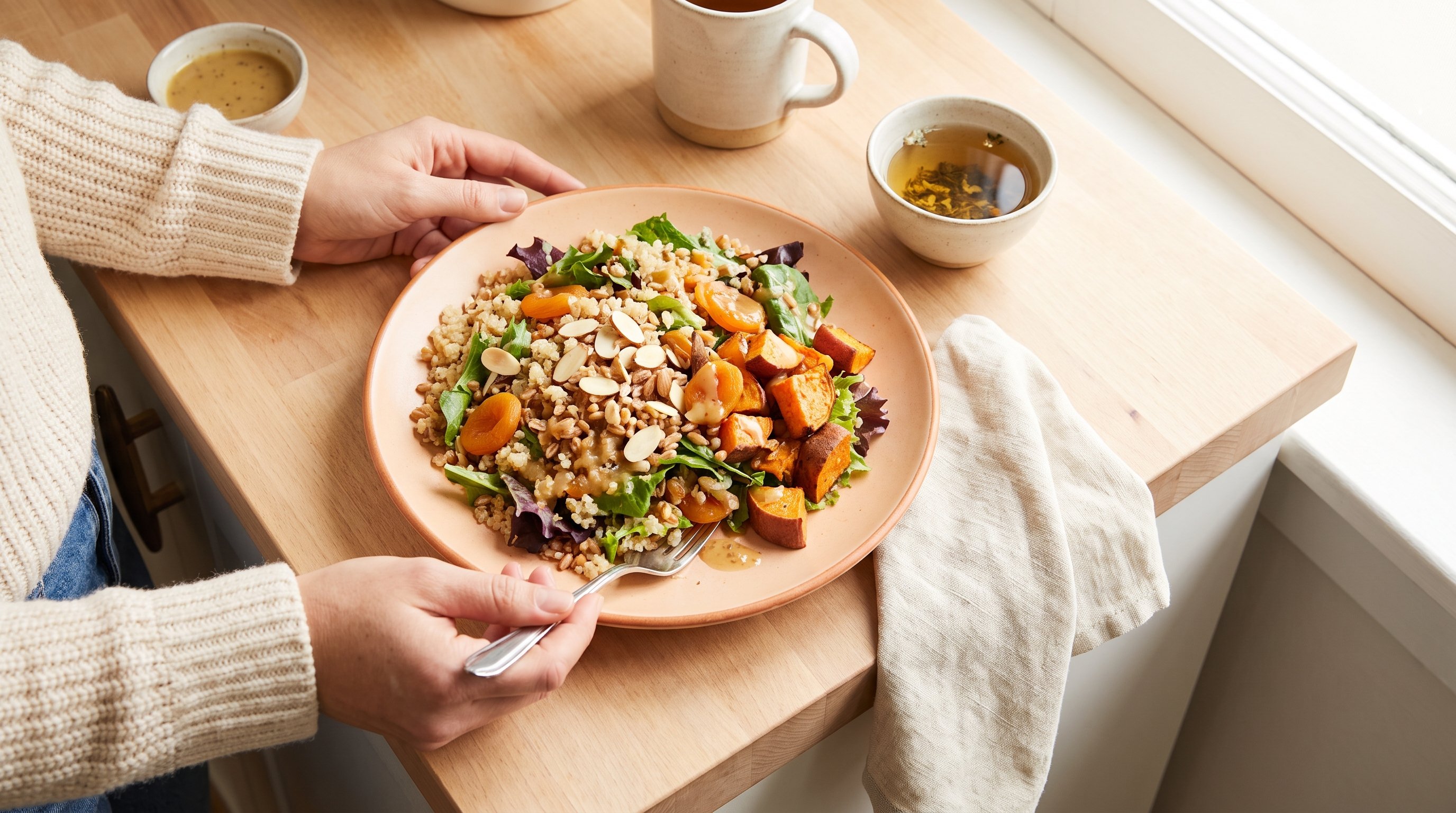
The best foods for energy are the ones that release glucose slowly: whole grains, beans, nuts, vegetables and lean proteins eaten together rather than alone.
Energy crashes usually come from meals that spike blood sugar fast and let it fall just as fast. Pairing slow carbohydrates with protein and fibre smooths that curve out.
This article covers how food actually affects energy, how much and how often to eat, the mistakes that drain people without them noticing, and where a tailored meal plan can take the guesswork out of it.
Does What You Eat Actually Change Your Energy?
Yes, and the mechanism is simple arithmetic about blood sugar, not magic in any single ingredient.
When you eat refined carbohydrates on their own, glucose rises fast and insulin follows to bring it back down, sometimes overshooting.
That overshoot is the mid-afternoon slump many people blame on being tired, when it is really just a sugar dip from two hours earlier.
Add fibre, protein or fat to the same meal and the sugar enters the bloodstream more slowly, so there is less of a spike and less of a crash.
Over a full day, three or four meals built this way keep blood sugar closer to a flat line instead of a row of sharp peaks and dips.
How Steady Energy Foods Actually Work in the Body
Slow-Release Carbohydrates Do the Heavy Lifting
Whole grains, oats, legumes and starchy vegetables contain fibre that slows digestion, so glucose trickles into the blood instead of flooding it.
That steady trickle means less insulin is needed at once, which lowers the chance of the sharp drop that leaves you reaching for a snack an hour later.
Protein and Fat Slow the Whole Meal Down
Protein and fat take longer to digest than carbohydrate alone, so adding eggs, fish, yoghurt or nuts to a carb-heavy plate stretches out the release of energy.
That is the whole mechanism: nothing is burned faster or blocked, the meal just empties into the bloodstream over a longer window.
How Often You Need to Eat to Avoid a Slump
Spacing Meals so Blood Sugar Stays Level
Most people do well eating every three to five hours, which usually works out to three meals plus one or two small snacks.
Going much longer than that without food often means the next meal arrives with you already hungry, which makes it easy to overeat refined carbs fast.

The table below is a simple way to see what a steady-energy plate looks like against a crash-prone one, meal by meal.
| Meal | Steady-Energy Choice | Crash-Prone Choice |
|---|---|---|
| Breakfast | Oats, nuts, berries | Sugary cereal alone |
| Lunch | Beans, vegetables, grain | White bread sandwich |
| Snack | Apple with nut butter | Biscuits |
| Dinner | Fish, sweet potato, greens | Takeaway pizza |
Why Food Swaps Beat Cutting Carbs Out Completely
Cutting carbohydrate out entirely is the harder route, and it tends to backfire because it is hard to sustain week after week.
Swapping white rice for brown rice, or white bread for wholegrain, keeps the meal familiar while changing how fast it digests.

A familiar plate with one or two smarter swaps gets eaten again tomorrow. A restrictive plan that bans whole food groups usually gets abandoned by the weekend, and then energy swings right back to where it started.
Fitting Energy-Steady Eating Into a Real Day
A working day with back-to-back meetings or a school run rarely leaves room for careful meal planning from scratch.
Keeping a short list of go-to combinations, like oats with fruit, or a grain bowl with beans and vegetables, removes the need to think it through every single time.
A customized anti-inflammatory meal plan built around food you already like helps the slow-carb-plus-protein pattern happen by default instead of needing a decision at every meal.
The Myth That One Superfood Fixes Fatigue
No single food, however it is marketed, fixes tiredness on its own.
Matcha, maca, spirulina or any other trending ingredient might add nutrients, but the body does not run on one ingredient any more than a car runs on one drop of fuel.
The real answer is the pattern across the whole day: how meals are spaced, what they are paired with, and whether sleep and hydration are in a reasonable place too.
There is no shortcut ingredient that replaces that pattern, no matter how it is labelled on a jar.
What Changes How Much Energy You Get From Food
Three things matter more than any single food choice, and they stack on top of each other.
The Biggest Levers
- Meal composition - pairing carbohydrate with protein or fat slows the glucose release and smooths out the whole afternoon.
- Meal timing - eating every three to five hours keeps blood sugar from dipping low enough to feel it.
- Hydration - even mild dehydration is often mistaken for tiredness, so water matters as much as the plate does.
Mistakes That Quietly Drain Your Energy
Skipping Breakfast and Loading Up Later
Skipping the first meal often means arriving at lunch too hungry, which leads to a bigger, faster-digesting plate and a harder crash afterwards.
Relying on Caffeine Instead of Food
Coffee can mask tiredness for a while, but it does not replace the glucose a proper meal provides, so the slump just arrives later.
Treating All Carbohydrates the Same
A refined carb eaten alone behaves very differently from the same carb eaten with fibre and protein, even though both show up as carbs on a label.
Under-Eating Overall
Cutting portions too far to lose weight faster often means too little fuel across the day, which shows up as fatigue before it shows up anywhere else.
Making Steady-Energy Eating Simple With Flame Diet
Building every meal around slow carbs, protein and fibre takes planning, and most days do not leave much room for that kind of thinking.
Flame Diet takes that planning off your plate, pairing a customized anti-inflammatory meal plan with progress tracking tools so water, weight and steps sit in one place alongside what you eat.
The nutrition and health guides inside the app explain the reasoning behind each swap, so the pattern becomes a habit rather than a rule you have to remember.
Manage Weight with Personalized Flame Diet
Make it simple with a plan made for you
Keeping Your Plate Steady for the Long Run
Steady energy is not about finding the perfect food, it is about building meals that release what they give you slowly instead of all at once.
Start with one meal today: add a protein or a handful of nuts to whatever carbohydrate is already on the plate.
A customized meal plan can take that one swap and build a full day, then a full week, around the same idea.
FAQ
Whole grains, legumes, nuts and vegetables paired with a protein source tend to last longest because they digest slowly. Fruit on its own digests faster, so pairing it with nut butter or yoghurt stretches the release out.
Cutting sugar out entirely is not necessary and is hard to sustain for most people. The bigger fix is pairing sugary or refined foods with fibre or protein so the spike and crash are both smaller.
A short list of two or three go-to combinations, prepped once, covers most busy days without needing fresh decisions. A customized meal plan is built to handle that planning automatically so the pattern holds even on rushed days.
It usually means the early motivation to plan carefully faded and old habits crept back in without being noticed. Flame Diet builds meals around a repeatable structure, rather than willpower each day, which is what keeps the pattern going past the first few weeks.
Share this post