Mediterranean Diet Food List: What to Eat and Why It Sticks
By:Author:Flame Diet Editorial
Updated on:October 18, 2026
- Does Eating This Way Actually Change Anything?
- What Actually Belongs on a Mediterranean Plate
- How Often Each Food Group Should Show Up
- Why Swapping Beats Cutting Out Foods Entirely
- Making the Food List Work on a Real Week
- The Myth That One Ingredient Does the Work
- What Decides How Much Difference This Makes
- Mistakes That Quietly Undo a Mediterranean Plate
- Building This Food List With Flame Diet
- Turning This Food List Into Your Everyday Plate
A Mediterranean diet food list is mostly vegetables, fruit, whole grains, beans, nuts, olive oil and fish, with meat and sweets kept as occasional extras rather than daily staples.
It works because the foundation foods are high in fibre and low in energy density, so you end up eating more volume for fewer calories without consciously restricting anything.
This article covers what actually goes on the list, how much to eat, where people trip up, and how to build a week around it without treating it as another strict rulebook.
Does Eating This Way Actually Change Anything?
The mechanism is simple: swap calorie-dense, low-fibre foods for ones that fill you up on fewer calories, and your daily total tends to drop without you tracking a single number.
Take a basic swap: a white bread sandwich with processed meat runs well over 500 calories, while a wholegrain version with vegetables, beans and a drizzle of olive oil can land closer to 400, just from the ingredients swapped.
That is 100 calories a day from one meal, which adds up to roughly 700 a week - not from eating less, but from eating differently.
None of this is magic. It is arithmetic plus appetite: fibre and water in vegetables and legumes take up space in your stomach, so you naturally stop eating sooner.
What Actually Belongs on a Mediterranean Plate
The pattern is built from a small number of food groups eaten often, and a few eaten rarely. Here is how the two halves of that mechanism actually work.
The Daily Foundation
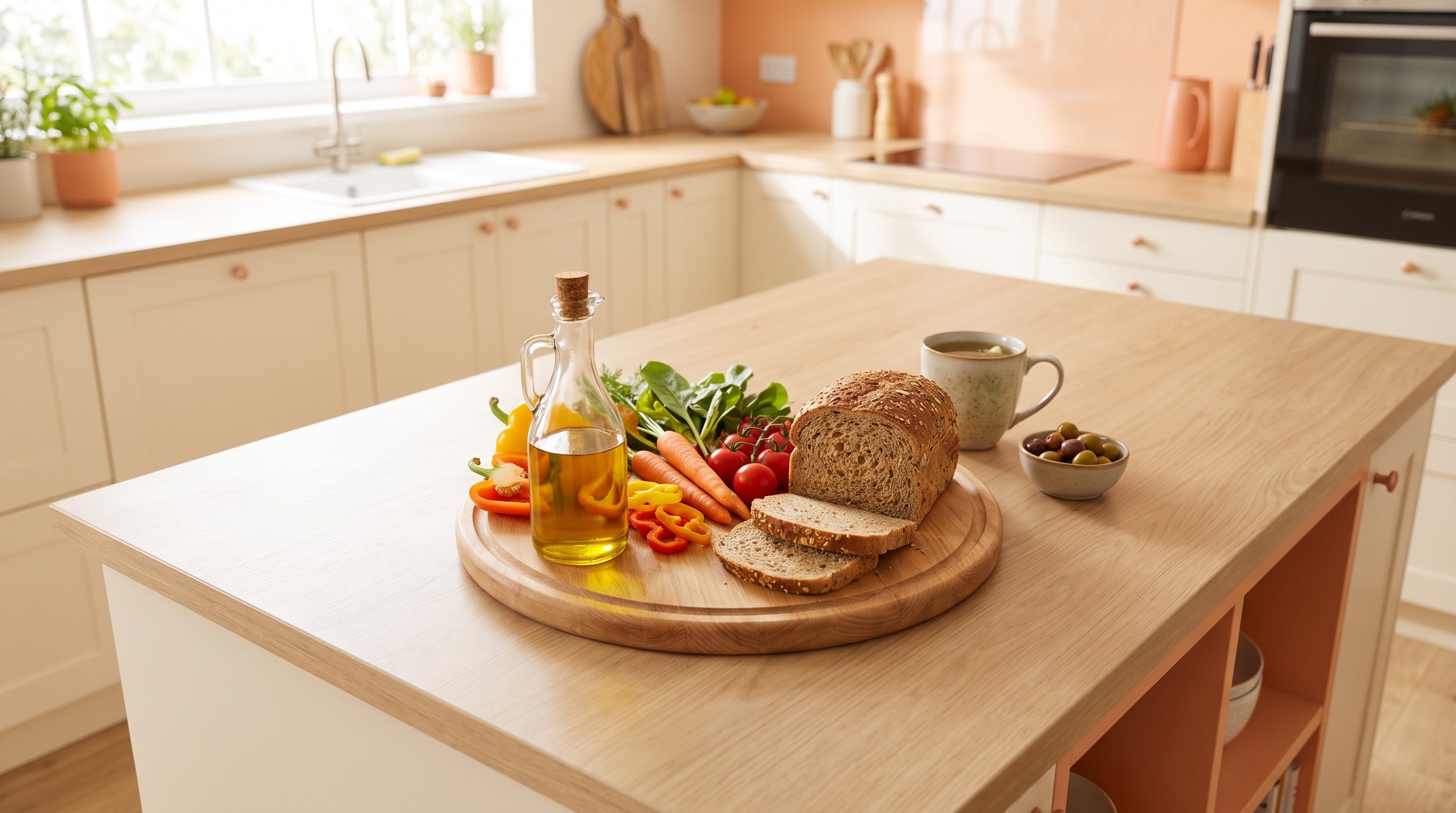
Vegetables, fruit, whole grains, legumes, nuts and olive oil form the base of nearly every meal. These are the foods doing the heavy lifting on fibre and volume, which is what keeps portions satisfying without piling on calories.
The Occasional Extras
Fish and seafood show up a few times a week, poultry and eggs less often, and red meat, sweets and refined grains sit at the back of the list as extras rather than defaults. Nothing is banned outright, it is just not the thing you reach for first.

Put those two halves together and you get a plate where the bulk of the calories come from foods that fill you up, and the smaller share comes from the foods that used to dominate the plate.
How Often Each Food Group Should Show Up
You do not need to weigh anything to apply this. A rough weekly rhythm is more useful than a daily checklist.
A Simple Weekly Rhythm
Think in terms of how often a food group appears across seven days, not how many grams land on your plate tonight.
| Food Group | How Often |
|---|---|
| Vegetables and fruit | Every meal |
| Whole grains and legumes | Most meals |
| Olive oil and nuts | Daily, small amounts |
| Fish and seafood | A few times weekly |
| Red meat and sweets | Occasional, not daily |
Why Swapping Beats Cutting Out Foods Entirely
Compare two approaches: cutting out whole food groups versus simply shifting what makes up most of your plate.
A strict elimination plan asks you to say no to bread, pasta, dairy or meat outright, which works for a while but tends to collapse the first time life gets busy or social.
Swapping white rice for a grain-and-legume mix, or a sugary snack for fruit and nuts, asks for less willpower because you are still eating a full meal, just built from different ingredients.
The food list approach wins on adherence because there is nothing to white-knuckle through. You are not avoiding a dinner invitation, you are just choosing differently once you are there.
Making the Food List Work on a Real Week
A busy week does not leave much room for elaborate cooking, which is where this pattern earns its keep.
Batch-cooked grains, a tin of beans, a bag of frozen vegetables and a bottle of olive oil can turn into a Mediterranean-style meal in under fifteen minutes, no fresh market trip required.
This is where a meal plan built around food you already like matters - this approach maps the same food groups onto meals you would actually make on a Tuesday night, not a weekend project.
Pairing that with simple step, water and weight tracking means you are not guessing whether the week added up to anything, you can just check.
The Myth That One Ingredient Does the Work
Olive oil does not melt anything, and no single food on this list targets a body area or speeds up results on its own. The body does not choose where it loses fat, and no ingredient changes that.
What actually happens is more boring and more reliable: a pattern built on fibre-rich, lower-calorie-density foods makes it easier to eat less overall, consistently, over time.
The real answer is patience plus the arithmetic from earlier - small calorie differences repeated across weeks, not one superfood doing the heavy lifting overnight.
What Decides How Much Difference This Makes
The food list itself is only part of the story. What you do with it day to day decides most of the outcome.
The Three Biggest Levers
- How often you default to the list - a Mediterranean-style lunch once a week barely registers, five or six times a week compounds.
- Portion size on the dense extras - olive oil and nuts are nutrient-rich but still calorie-dense, so a splash is different from a glug.
- Consistency across weeks, not days - one perfect day does nothing if the other six look nothing like it.
Mistakes That Quietly Undo a Mediterranean Plate
Treating Olive Oil As Unlimited
It is a healthier fat than most, but it is still roughly 120 calories per tablespoon. Measure it a few times until your hand learns the right amount.
Skipping the Legumes and Grains
Vegetables alone do not keep you full for long. Pair them with beans, lentils or whole grains so the meal actually holds you over.

Buying Processed Mediterranean-Labelled Snacks
A packet calling itself Mediterranean can still be refined flour and sugar. Check what is actually inside rather than trusting the label.
Expecting Red Meat and Sweets to Disappear Completely
The pattern makes them occasional, not banned. Trying to cut them out entirely is the kind of all-or-nothing rule that tends to backfire within a few weeks.
Building This Food List With Flame Diet
Knowing the food list is one thing - building a week of actual meals from it is the part that usually stalls.
Flame Diet turns the same vegetables, grains, legumes, fish and olive oil into a customized anti-inflammatory meal plan, so the groundwork from this article becomes a shopping list and a plan instead of a theory.
Alongside the meal plan sits progress tracking for steps, water and weight, light guided workouts, and nutrition guides if you want to go deeper into why certain swaps matter.
Manage Weight with Personalized Flame Diet
Make it simple with a plan made for you
Turning This Food List Into Your Everyday Plate
Pick one meal today and rebuild it from the list: swap the refined grain for a whole one, add a handful of legumes, and finish with olive oil instead of a heavier sauce.
Repeat that one swap daily and it becomes the default without any dramatic overhaul, which is the whole point of building a plan around this pattern rather than following a stricter rulebook.
FAQ
Dried beans, frozen vegetables, oats and tinned fish are some of the cheaper items in a supermarket, so the core of the list does not require premium ingredients. Fresh fish and nuts cost more, but they are the smaller, occasional part of the pattern, not the daily base.
No, the pattern swaps refined versions for wholegrain ones rather than cutting grains out. The fibre in whole grains is part of what makes the pattern filling in the first place.
Fish is one route to the same nutrients, not a requirement, and Flame Diet's meal plan can be built around the proteins and ingredients you actually want to eat.
That varies by person and by how many meals a week follow the pattern, so it is impossible to put a fixed number on it. Most people find the swaps stop feeling like swaps once they have repeated them for a few weeks running.
Share this post