Foods That Cause Joint Pain: What to Swap and Why
By:Author:Flame Diet Editorial
Updated on:October 18, 2026
- Do Certain Foods Really Make Joints Feel Worse?
- Weighing an Elimination Diet Against Gradual Food Swaps
- Why Gradual Swaps Outlast a Strict Food Ban
- Adapting These Food Swaps to Different Life Stages
- Making These Swaps Work Around a Normal Week
- The Myth That One Bad Meal Ruins Your Joints
- How Flame Diet Supports Smarter Food Swaps
- Picking the One Swap to Start This Week
Certain foods, mainly ones high in refined sugar, fried fats and heavily processed ingredients, are linked to low-grade inflammation that can make joints feel stiffer or more sensitive over time.
The mechanism is not mysterious: some foods push the body toward a more inflammatory state, and joints are often where people notice that first because cartilage and the tissue around joints are sensitive to it.
This guide covers which foods tend to be the biggest offenders, the honest arithmetic on how much swapping them out can help, and how to build a plate that works without cutting out entire food groups overnight.
Do Certain Foods Really Make Joints Feel Worse?
Yes, for some people, and the mechanism is about inflammation load, not a single food acting like a switch.
Refined sugar, fried foods and heavily processed snacks are digested in ways that can nudge the body toward a more inflamed state, and joints often sit at the sharp end of that because the tissue there is already working under load every day.
The honest arithmetic: if a plate is built mostly from fried, sugary or ultra-processed foods meal after meal, that is a repeated inflammatory signal, day after day, week after week.
Swap even a few of those meals for whole-food options and the signal drops a little each time - it is additive, not instant, and nobody should expect one clean meal to undo months of the other pattern.
That is also why this works better as a gradual shift than a strict ban - the body does not grade on an all-or-nothing scale, it responds to the overall pattern across the week.
Weighing an Elimination Diet Against Gradual Food Swaps
This is the decision most people actually face: cut out whole food groups all at once, or swap the worst offenders out gradually while keeping meals you still enjoy.
Both can reduce the inflammatory load on your plate, but they differ a lot on how livable they are across a normal week, and livability is what decides whether the change lasts.

| Factor | Elimination Diet | Gradual Swaps |
|---|---|---|
| Starting effort | High, strict rules | Low, one change at a time |
| Social meals | Often hard to join | Easy to adapt |
| Risk of giving up | Higher, feels rigid | Lower, feels doable |
| Cost to try | Can mean new groceries fast | Gradual, spread over weeks |
| Long-term fit | Hard to sustain for years | Fits an ordinary week |
Neither approach is wrong, but one of them is a lot easier to keep doing on a Tuesday night when you are tired and the fridge is half empty.
Why Gradual Swaps Outlast a Strict Food Ban
An elimination diet asks you to say no to a long list of foods starting Monday, and that is a lot of willpower to spend before breakfast is even over.
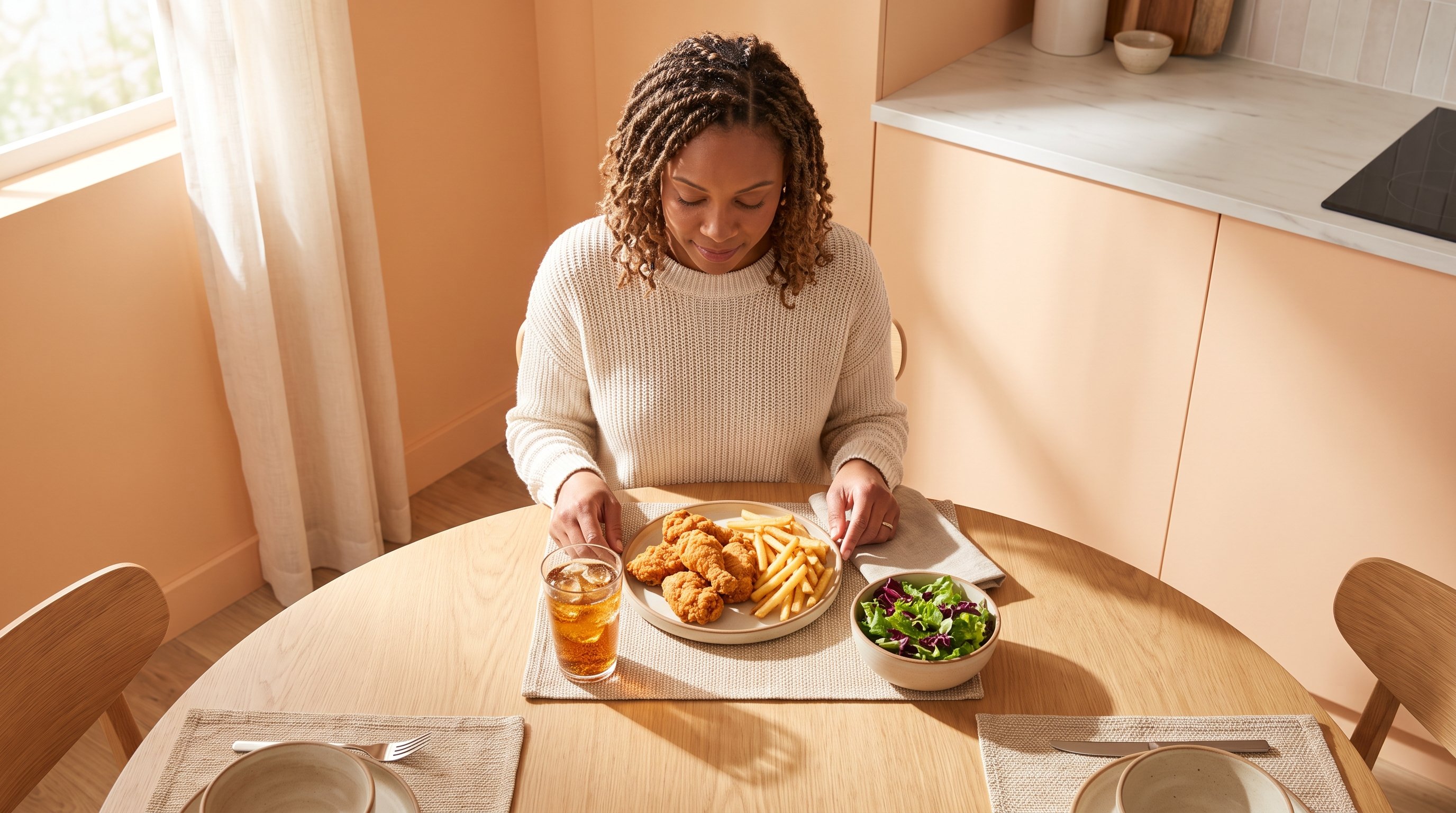
Gradual swaps ask you to change one thing this week - maybe the fried chicken becomes grilled, maybe the soda becomes sparkling water with fruit - and that is a small enough ask that it actually gets done.
Adherence is the whole game here: a diet that gets followed for six months beats a stricter one that gets abandoned after ten days.
Swapping one fried meal a week for a baked or grilled version does not feel like deprivation, which is exactly why it tends to stick when a full elimination list does not.
Adapting These Food Swaps to Different Life Stages
If You Are Just Starting Out
Pick one obvious offender - sugary drinks or fried takeaway - and swap just that for a few weeks before touching anything else.
If You Are Always Short on Time
Keep a stash of frozen vegetables and pre-cooked grains so the fast option at 7pm is not automatically the fried one.
If You Are Older and Joints Already Feel Stiff
Small, consistent swaps matter more than a dramatic overhaul, since the goal is lowering the daily load rather than chasing a quick change.
If You Eat Out Often
Scan the menu for grilled, baked or roasted options first, and treat the fried section as an occasional choice rather than the default.
Making These Swaps Work Around a Normal Week
The hardest part of any food swap is not knowing what to eat instead - it is remembering to do it on a day when everything else is already demanding attention.
A written plan for the week, even a loose one, takes that decision off your plate before you are standing in front of an open fridge at 6pm.

This is where a customized anti-inflammatory meal plan lays out the week in advance so the swap is already decided before hunger makes the choice for you.
Pairing that with a simple way of tracking water, steps and weight in one place means you are not juggling three separate habits at once - just one plate, one day at a time.
The Myth That One Bad Meal Ruins Your Joints
No single fried meal or sugary drink causes lasting joint damage, and no single healthy meal reverses it either.
The body responds to patterns repeated over weeks and months, not to one plate on one Friday night.
The same goes for spot targeting - there is no way to eat in a way that only affects the knees or only the hands, because inflammation load works across the whole body, not one joint at a time.
The real answer is less exciting than a quick fix but more useful: consistent swaps across most meals, most weeks, are what shift the overall pattern.
How Flame Diet Supports Smarter Food Swaps
Knowing which foods to swap is only half the job - the other half is having a plan that makes the swap the easy option, not the extra effort.
Flame Diet builds a customized anti-inflammatory meal plan around food you already like, so the fried-to-grilled or soda-to-water swap is already built into the week rather than something you have to invent from scratch each day.
It also pairs that plan with light, guided workouts, progress tracking for things like water and weight, and nutrition guides written to help the swaps make sense, not just happen by accident.
Manage Weight with Personalized Flame Diet
Make it simple with a plan made for you
Picking the One Swap to Start This Week
Look at your week and find the one meal that is fried, sugary or heavily processed more often than not, and plan a grilled, baked or whole-food version of it for next time.
That single swap, repeated, does more over a few months than any strict one-week elimination plan that gets abandoned by day four.
A customized meal plan can help you turn that one swap into a full week's plan, so you are not left guessing what comes after the first change.
FAQ
Refined sugar, fried foods and heavily processed snacks tend to come up most often, because they can push the body toward a more inflammatory state. Whole foods like vegetables, fruit, whole grains and lean proteins generally pull the other way.
No, gradual swaps tend to work better than a strict ban because they are easier to keep doing for months rather than days. A plate that is mostly whole foods with the occasional fried meal is still a big shift from one that is mostly fried.
Food swaps address one part of the picture - inflammation load - but they are not a cure and results vary by person. Flame Diet's approach is built to support that kind of gradual shift alongside light movement, not to replace other care.
Trying to change everything in one week is the most common reason people stop, because it feels like too much too fast. Picking one swap at a time and giving it a few weeks before adding another tends to hold up better.
Share this post