Foods High in Potassium: Why Whole Foods Beat Supplements
By:Author:Flame Diet Editorial
Updated on:October 18, 2026
- What a Potassium-Rich Day Looks Like on Your Plate
- How Much Potassium You Actually Need Each Day
- Why Eating Whole Foods Beats Popping a Potassium Pill
- Making Potassium-Rich Meals Work on a Busy Week
- Who Needs to Pay Closer Attention to Potassium Intake
- What Changes As Potassium-Rich Eating Becomes Routine
- Building a Potassium Habit With a Customized Meal Plan
- Turning Potassium-Rich Choices Into a Daily Default
Foods high in potassium beat supplements for most people because food delivers the mineral alongside fibre, water and other nutrients your body handles together, not as an isolated dose.
Potassium works inside and around your cells to help muscles contract and fluid balance stay steady, and whole foods release it slowly as you digest rather than all at once.
This guide covers what a day of potassium-rich eating looks like, roughly how much to aim for, why food wins over pills for most people, and how to fit it into a normal week.
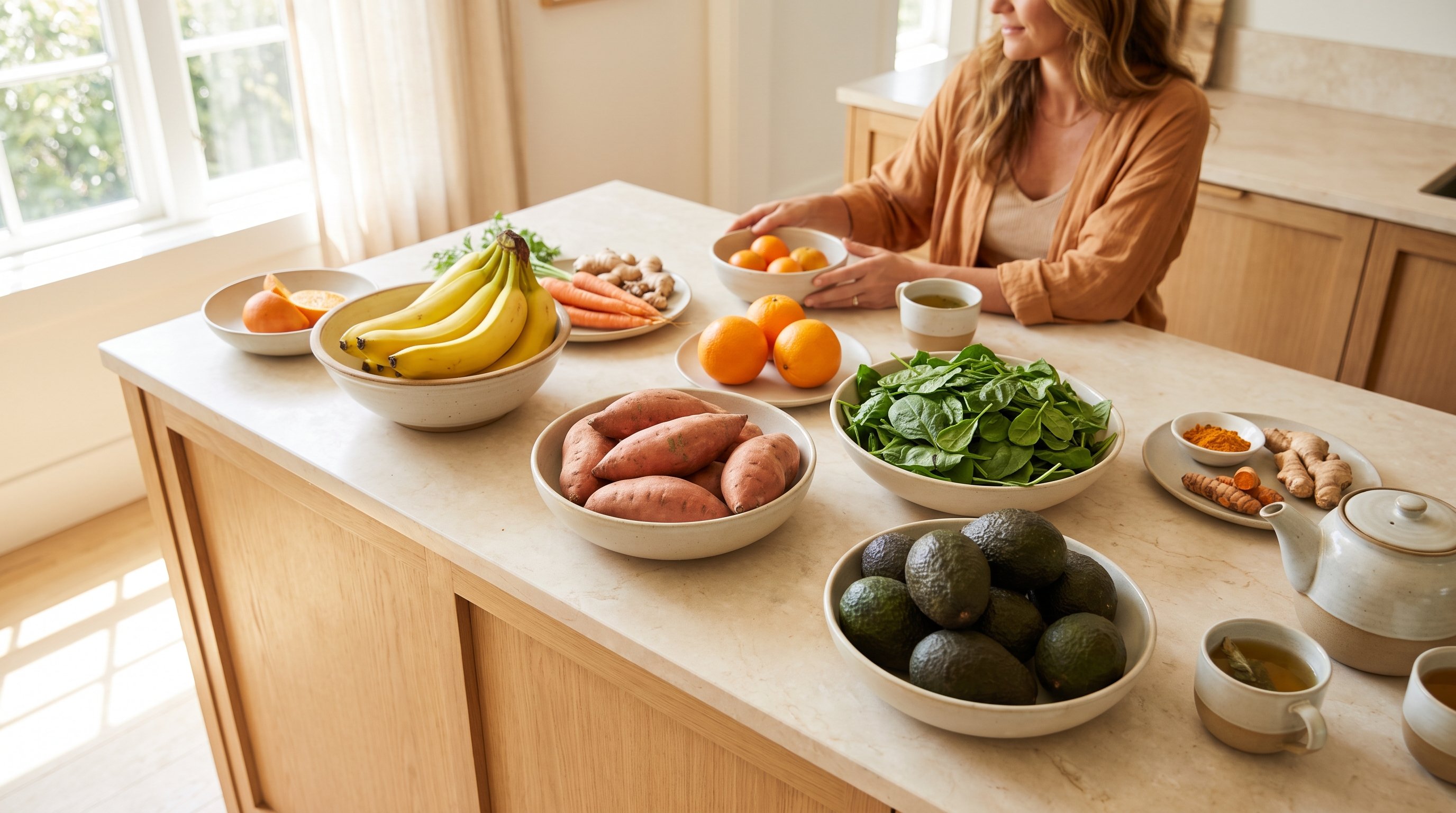
What a Potassium-Rich Day Looks Like on Your Plate
You don't need a special shopping list to eat well for potassium. A few swaps across breakfast, lunch, dinner and snacks usually cover it.
A Sample Day of Potassium-Rich Eating
- Breakfast - porridge topped with sliced banana and a spoon of yoghurt
- Lunch - baked sweet potato with a side salad and white beans
- Afternoon snack - handful of dried apricots or a small orange
- Dinner - grilled salmon with steamed spinach and new potatoes
- Evening - a cup of coconut water or a side of avocado
None of this requires a new routine, just swapping a lower-potassium side for one of these each time you cook.
How Much Potassium You Actually Need Each Day
Daily Amounts From Common Foods
Rather than counting milligrams all day, it helps to know roughly where potassium shows up and how much a normal portion gives you.
| Food | Potassium |
|---|---|
| Medium banana | About 420mg |
| Baked potato with skin | About 900mg |
| Cooked spinach, half cup | About 420mg |
| White beans, half cup | About 600mg |
| Avocado, half fruit | About 490mg |
Stack two or three of these across a day and the total adds up fast without any tracking app or supplement bottle.
Why Eating Whole Foods Beats Popping a Potassium Pill
A potassium supplement looks like the faster route, one capsule versus chopping vegetables and planning meals.
But supplements deliver a concentrated dose all at once, while food spreads potassium out alongside fibre and water that slow absorption and support digestion.

Food also comes with built-in variety, so you're never relying on a single source day after day.
That's the real adherence argument. A banana or a baked potato is something you'll actually keep eating next month, while a pill routine is easy to let slip once the bottle runs low.
Making Potassium-Rich Meals Work on a Busy Week
The easiest way to keep potassium-rich food in rotation is to stop treating it as a separate task and build it into meals you already cook.
A jacket potato instead of white rice, spinach stirred into a pasta sauce, a banana added to a smoothie - small swaps, repeated often, do more than one perfect meal ever will.
This is exactly where a meal plan built around food you already like helps, because a customized anti-inflammatory meal plan maps these swaps into your weekly routine so you're not guessing what to add each week.
Pair that with keeping steps, water and weight in one place and the whole pattern becomes something you check rather than something you have to remember.
Who Needs to Pay Closer Attention to Potassium Intake
If You're Just Starting Out
Start with one swap a day rather than overhauling every meal at once, since a single banana or baked potato added to your usual plate is an easy habit to repeat.
If You're Short on Time
Lean on foods that need no prep, dried apricots, a banana, a tin of beans rinsed and added to a salad, so potassium doesn't depend on having time to cook.

If You're Older and Watching Your Diet Closely
Food sources let you adjust portions gradually and notice how you feel, which is harder to do with a fixed supplement dose .
If You're Cooking for a Family
Sides like roasted sweet potato or steamed spinach work for everyone at the table, so you're not preparing a separate dish just for one person's potassium goal.
What Changes As Potassium-Rich Eating Becomes Routine
Don't expect a dramatic shift in how you feel within days. Food-based change is slower and quieter than that.
Most people drop the habit around the two or three week mark, usually when the new foods haven't made it onto the shopping list yet and old defaults creep back in.
Staying vague about timing is honest here, because everyone's starting point and current diet are different, so focus on keeping the swaps going rather than watching for a specific result by a specific date.
Building a Potassium Habit With a Customized Meal Plan
Knowing which foods are high in potassium is one thing, actually buying, cooking and eating them week after week is another.
Flame Diet closes that gap with a customized anti-inflammatory meal plan that already includes potassium-rich staples, plus progress tracking tools so you can see water, weight and steps without juggling separate apps.
The nutrition and health guides inside also break down food choices in plain terms, so you're not left wondering why a certain swap matters.
Manage Weight with Personalized Flame Diet
Make it simple with a plan made for you
Turning Potassium-Rich Choices Into a Daily Default
The simplest next step is picking one meal today and swapping in a potassium-rich food you already like, a baked potato instead of chips, a banana instead of a packaged snack.
Repeat that same swap for a week and it stops being a decision, which is exactly what a customized meal plan is built to support over time.
FAQ
Potatoes with the skin on, bananas, spinach, white beans and avocado are all strong everyday sources. Mixing a couple of these into meals across the day covers most people's needs without any counting.
A supplement might feel quicker, but food spreads the mineral out alongside fibre and water, which supports steadier digestion. Whole foods also give you variety instead of relying on one capsule every day.
You don't need every food on the list, just a few you'll actually eat regularly, whether that's bananas, beans or sweet potato. A customized meal plan can help you find swaps that fit what you already enjoy.
It usually comes down to planning, if potassium-rich foods aren't on the shopping list, they won't end up on the plate. Keeping a short, repeatable list of two or three go-to foods makes it easier to stay consistent.
Share this post