Beginner Home Workout: The Honest Guide
By:Author:Flame Diet Editorial
Updated on:October 18, 2026
- Can a Beginner Home Workout Actually Build Strength
- What Happens in Your Body During a Bodyweight Session
- How Many Sessions a Week Actually Count
- Home Training Versus Joining a Gym
- Fitting Short Workouts Around a Packed Week
- The Myth That Home Workouts Reshape One Body Part
- The Three Variables That Decide Your Progress
- Where Beginner Routines Usually Go Wrong
- Making a Beginner Home Workout Easier With Flame Diet
- Starting Your Beginner Home Workout This Week
A bodyweight training routine works the same way any training does: it asks your muscles to do a bit more than usual, then your body adapts between sessions. No equipment, no gym membership and no fancy gear required for that to happen.
The mechanism is simple. Squats, push-ups, lunges and planks load your muscles using your own bodyweight, and that load is enough to prompt change if you repeat it often enough and give it time to work.
This guide covers whether home workouts actually add up, how the mechanism works, how much you need to do, why the simple version beats the complicated one, and how to avoid the mistakes that quietly stall most people in week two.
Can a Beginner Home Workout Actually Build Strength
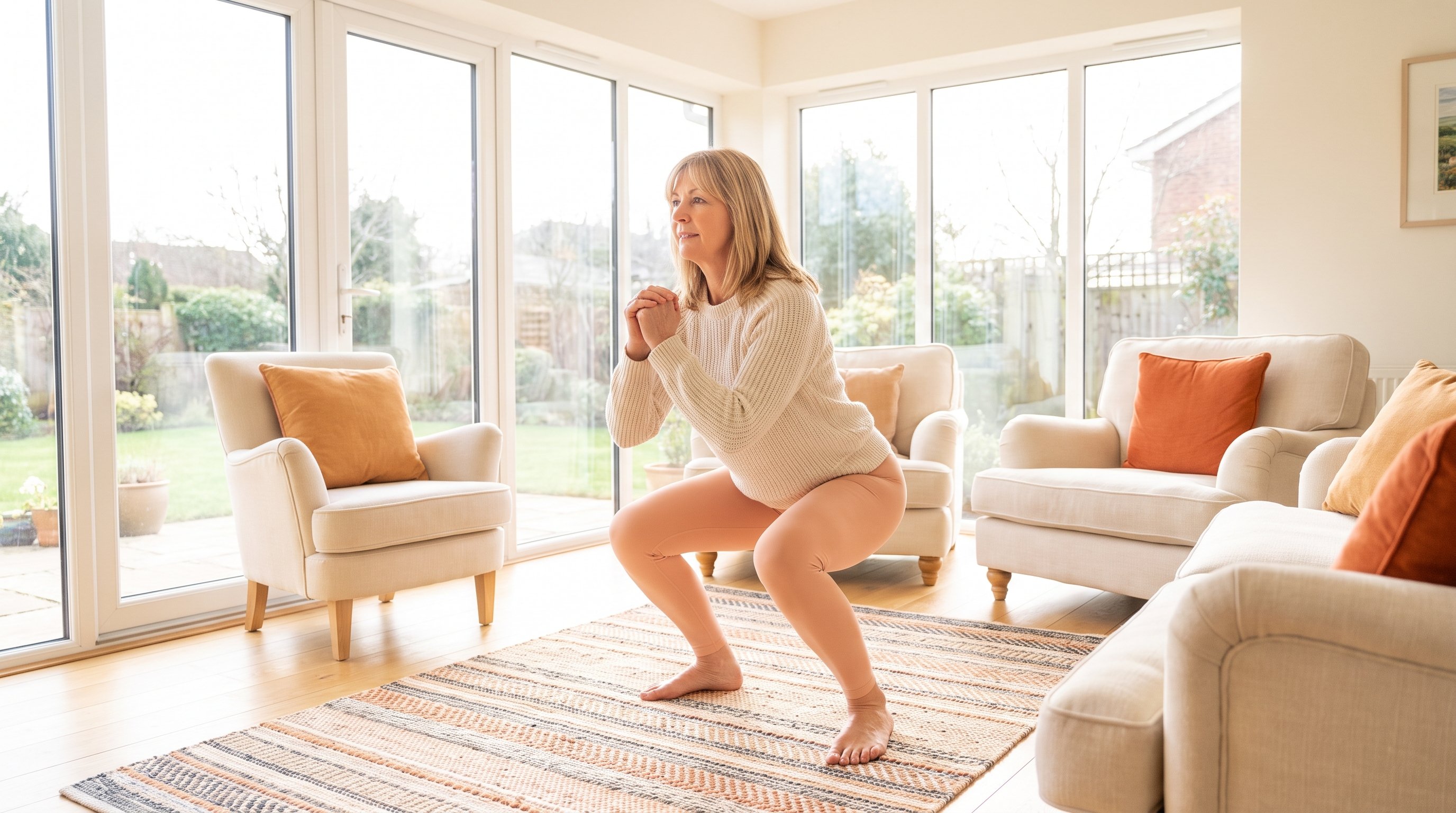
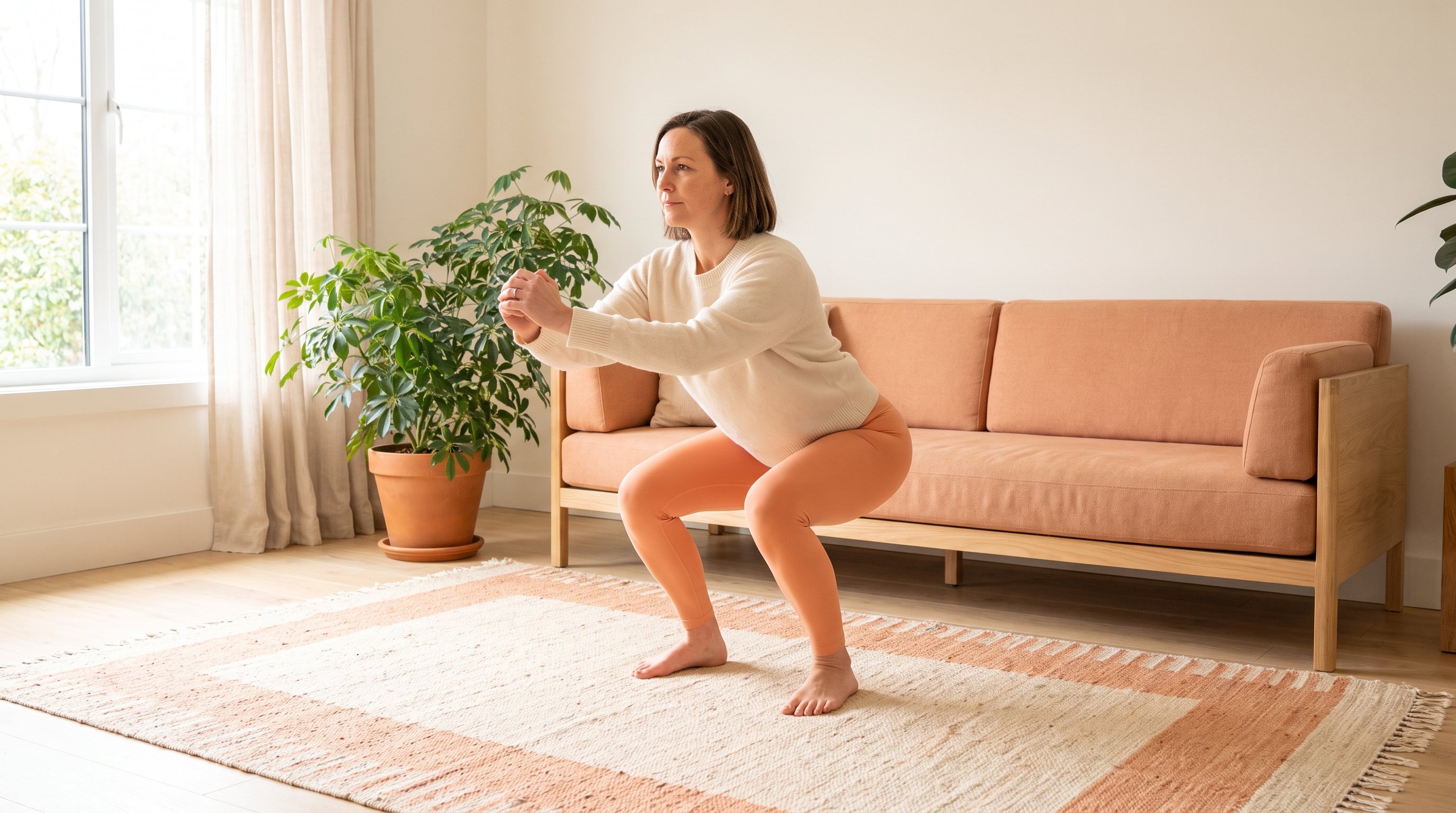
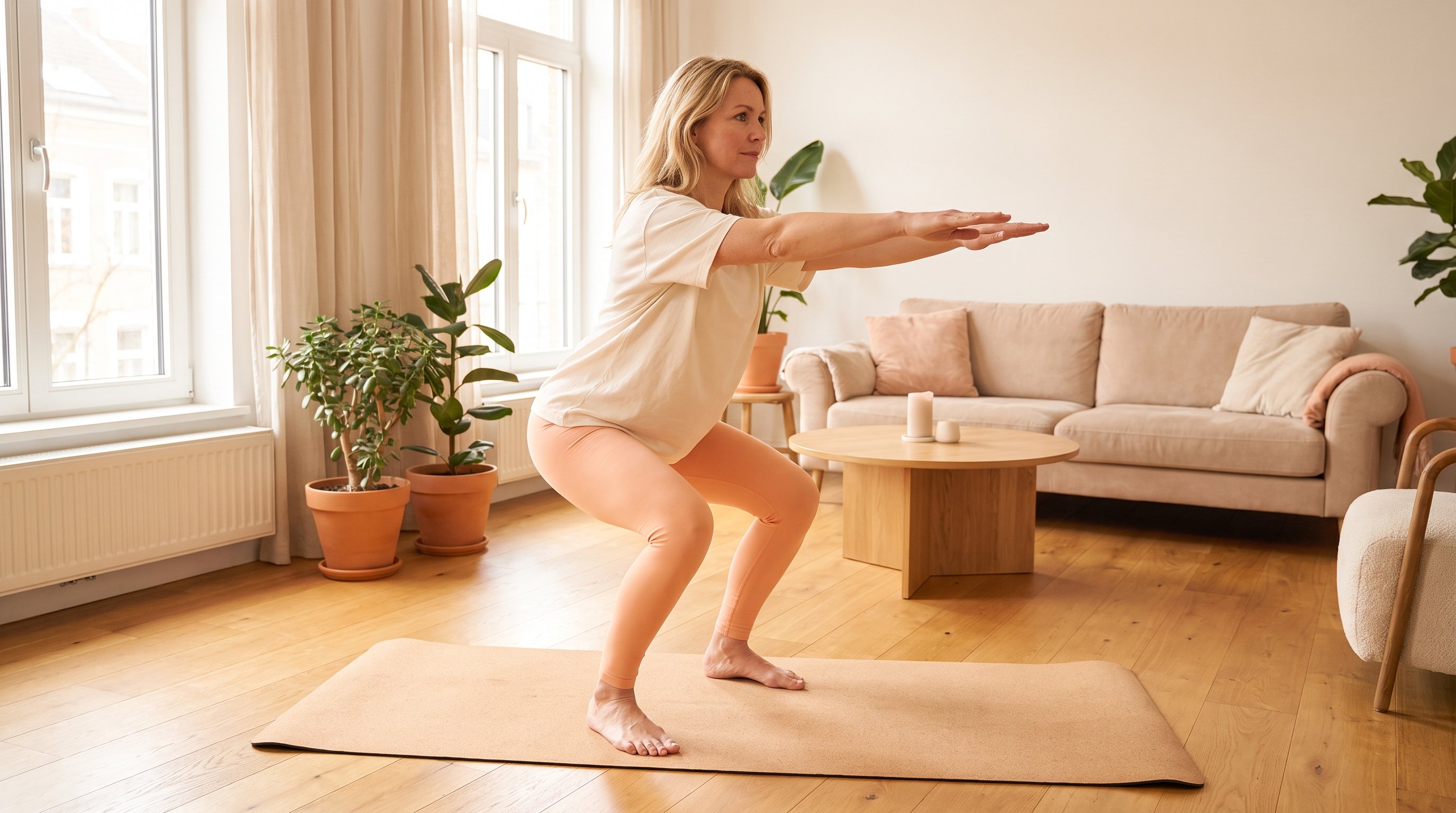
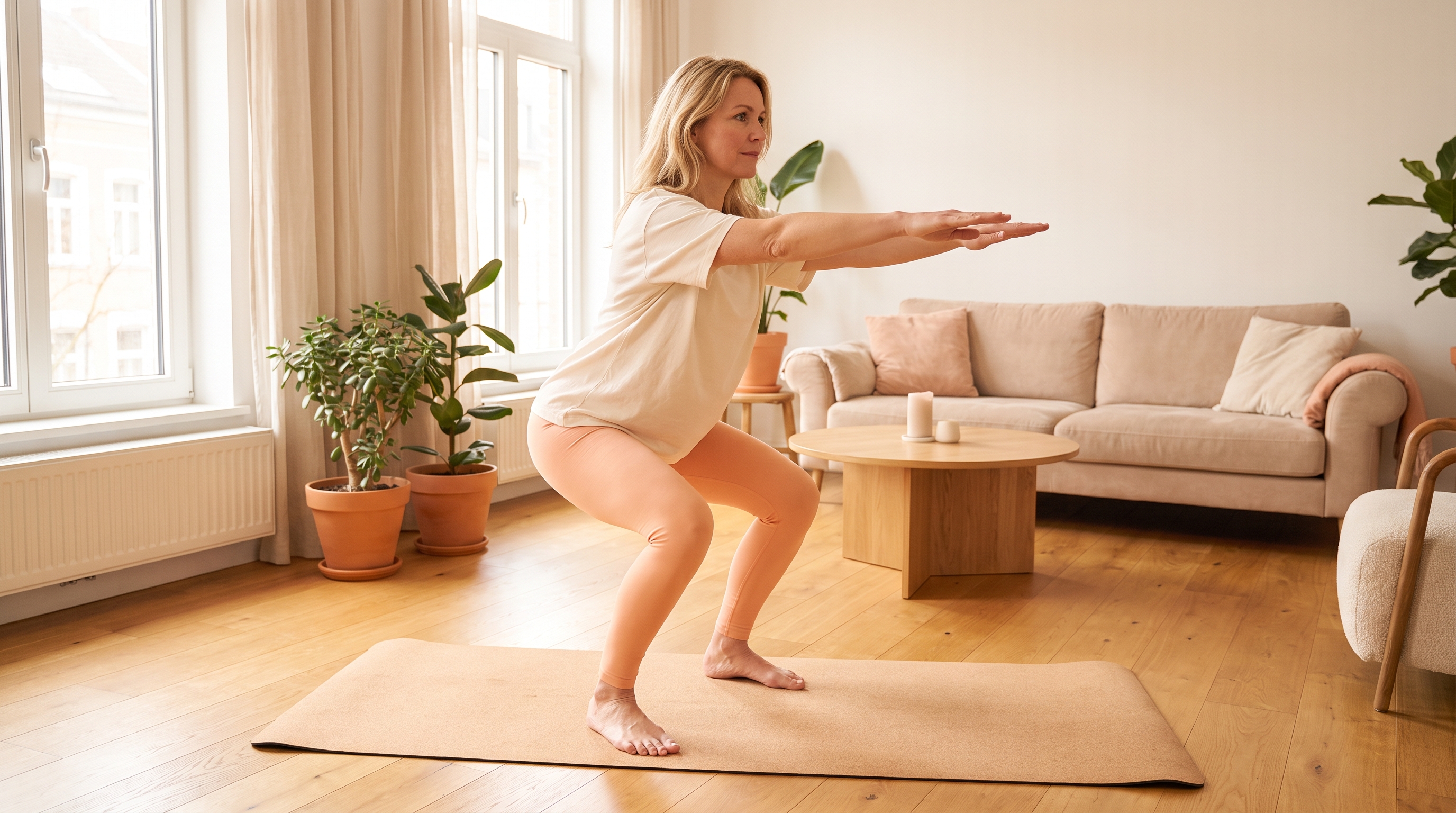
Yes, and the arithmetic is plain: a bodyweight squat loads your legs with roughly your own bodyweight each rep, which is a real training stimulus whether you're in a gym or a hallway.
Do three sets of twelve squats and that's 36 reps of load on your legs in under ten minutes, repeated two or three times a week.
Over weeks, that repeated load is what drives change, not the postcode where you trained.
The honest caveat: training at home won't out-load a barbell squat forever, because bodyweight is a fixed resistance and strength gains eventually plateau without added load or more reps.
For most beginners, though, that ceiling is months away, which is plenty of runway to build a habit and see real change in how exercises feel.
What Happens in Your Body During a Bodyweight Session
Two separate things happen when you move through a training session, and understanding both helps explain why consistency matters more than intensity.
Muscles Adapt to Repeated Load
Every rep of a squat, push-up or lunge creates small amounts of muscular stress, and your body responds by reinforcing those tissues between sessions. That's why rest days aren't wasted days - they're when the adaptation from the previous workout actually settles in.
Your Heart and Lungs Get Drawn in Too
Move through exercises back-to-back with short rests and your heart rate climbs the same way it would on a short jog. That's the cardiovascular side of a bodyweight circuit, and it's part of why a 20-minute session can leave you breathing harder than you expected.
Neither part needs equipment to happen, which is the whole case for training at home in the first place.
How Many Sessions a Week Actually Count
There's no single magic number, but a workable starting point for a beginner is two to three sessions a week, each lasting 15 to 30 minutes.
Why This Range Works for Beginners
Two sessions gives your muscles enough repeated stimulus to adapt, and three leaves a rest day between most of them so recovery can happen. Fewer than two a week stretches the gap so far that each session feels like starting over.
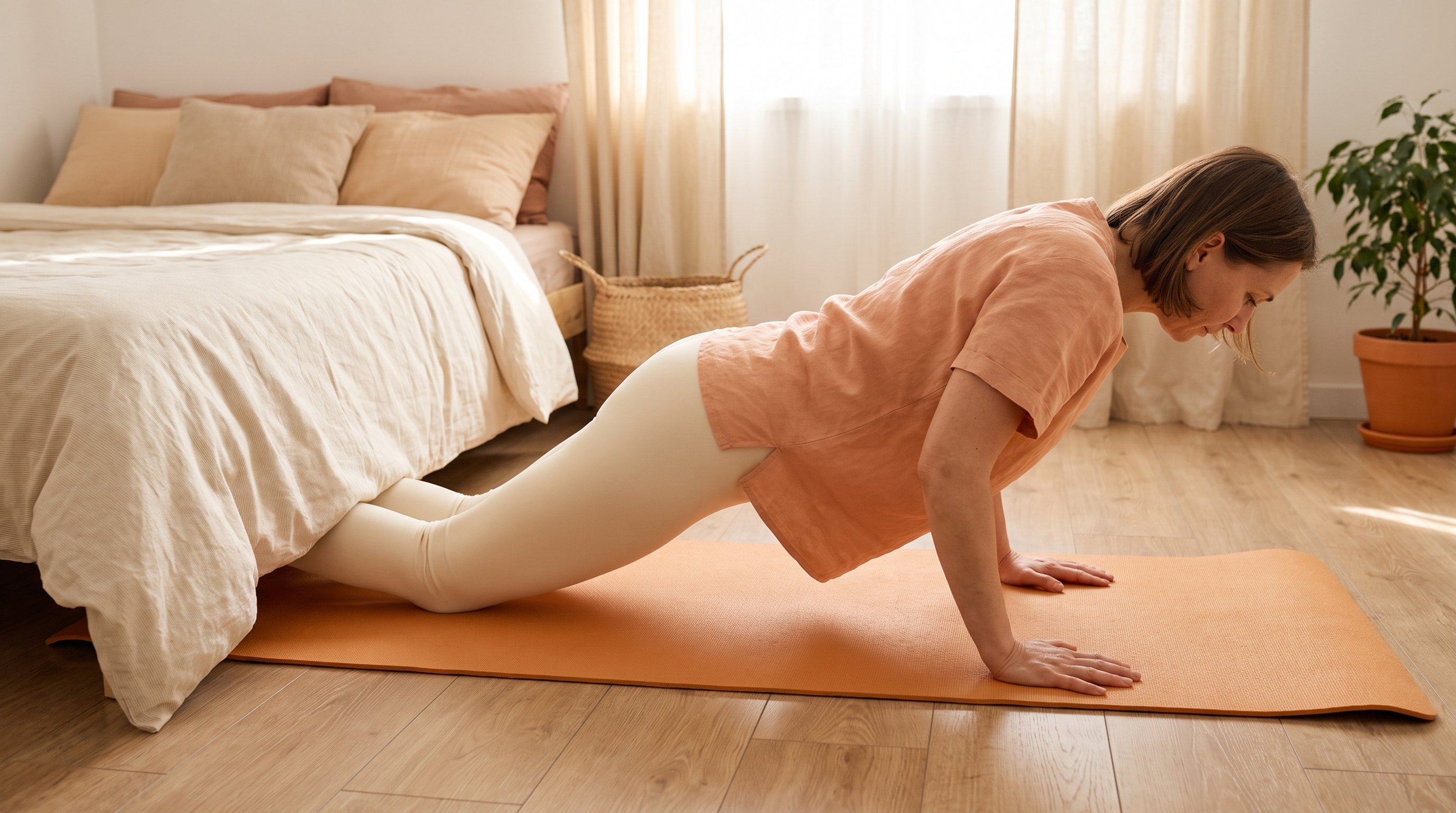
The table below gives a simple structure you can copy without overthinking the plan.
| Timeframe | Sessions | Duration |
|---|---|---|
| Week 1 | 2 sessions | 15 minutes |
| Week 2 | 2 sessions | 20 minutes |
| Week 3 | 3 sessions | 20 minutes |
| Week 4 | 3 sessions | 25 minutes |
Home Training Versus Joining a Gym
A gym membership offers more equipment, but training at home offers something that matters more in the early weeks: zero friction between deciding to train and actually starting.
No commute, no changing rooms, no waiting for a machine - you roll out a mat and you're training.
That matters because the single biggest variable in any fitness routine is whether you actually show up, and the easier option wins that contest almost every time.
A gym can absolutely work, but only for someone who'll reliably go, and for a lot of beginners that reliability has to be built first, which is exactly what a low-friction home routine is good for.
Fitting Short Workouts Around a Packed Week
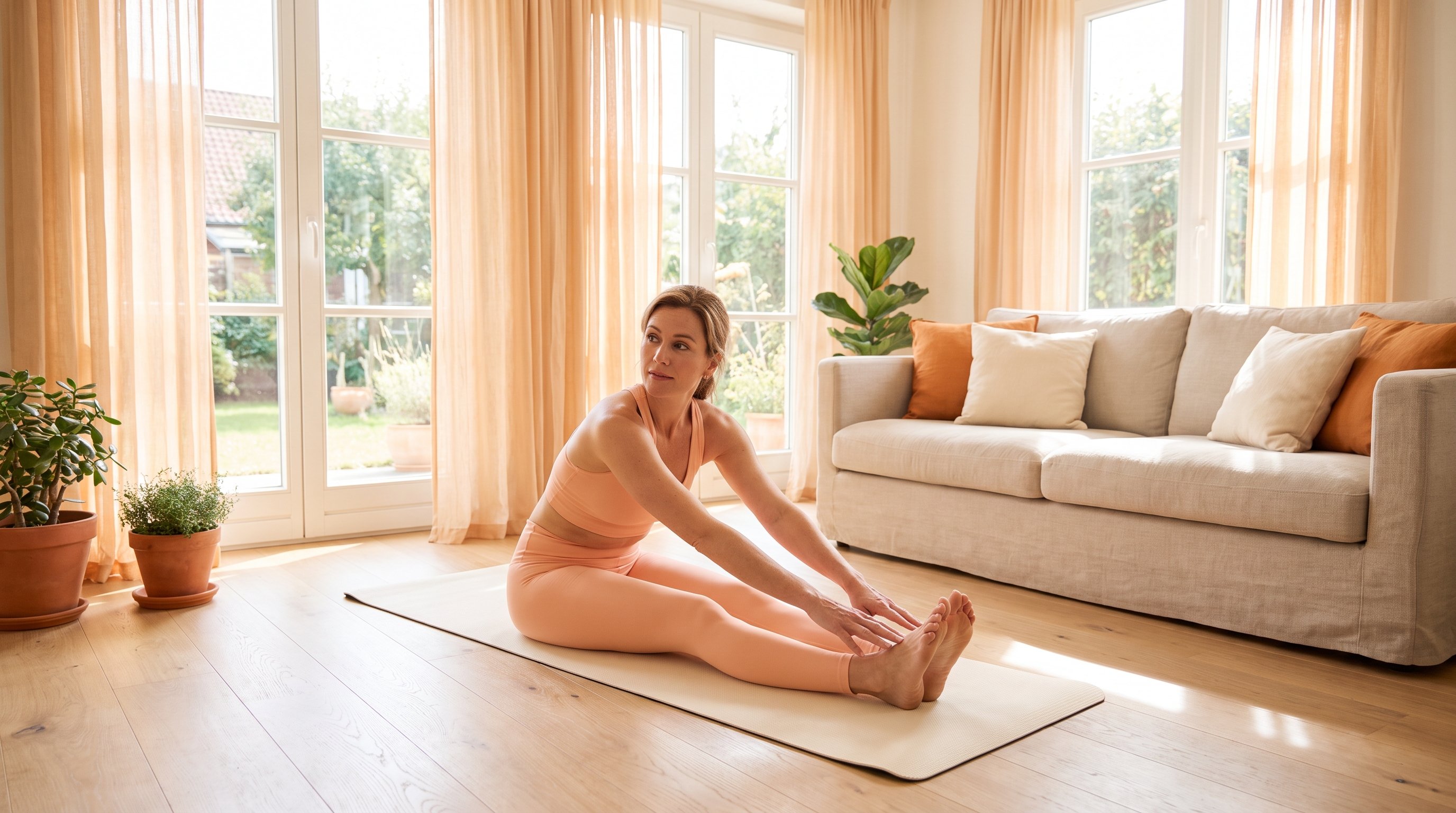
A 20-minute bodyweight session fits into gaps a gym trip never could: before the household wakes up, during a lunch break, or right after you close the laptop for the day.
The trick is attaching it to something that already happens daily, so it stops needing a decision each time - straight after brushing your teeth, or right before you check your phone in the morning.
This is also where tracking helps rather than hinders, because seeing a short streak of completed sessions makes the next one easier to start.
Flame Diet keeps workouts, steps and water intake in one place, so a 20-minute bodyweight session logs itself alongside the rest of the day instead of living in a separate app you forget to open.
The Myth That Home Workouts Reshape One Body Part
No exercise, home or gym, lets you choose where your body loses fat from - that's not how fat loss works, full stop.
Doing a hundred squats a day won't specifically slim your thighs, and endless crunches won't specifically flatten your stomach, because fat loss happens across the whole body based on overall energy balance, not which muscle you just worked.
The real answer is less exciting but more useful: training at home builds strength and fitness in the muscles you work, and any change in how your body looks comes from the combination of that training with what you eat over time.
Chase strength and consistency, not a specific shape, and the rest tends to follow its own path.
The Three Variables That Decide Your Progress
Three things determine how much a training session actually gives you back, and they matter in this order.
What Actually Moves the Needle
- Consistency over weeks - two sessions every week for two months beats five sessions crammed into one busy week then nothing for a month.
- Gradually harder versions - once 12 squats feel easy, moving to 20, or adding a pause at the bottom, keeps the stimulus working.
- Recovery between sessions - sleep and rest days are when the adaptation from training actually happens, not an optional extra.
Get the first one right and the other two tend to sort themselves out, because showing up regularly is what creates the chance to progress or rest properly in the first place.
Where Beginner Routines Usually Go Wrong
Starting With Too Much, Too Soon
An hour-long session on day one often leaves you too sore to move by day three, which cancels the habit before it starts. Keep the first week short - 15 minutes is plenty while your body learns the movements.
Skipping Rest Days Entirely
Training every single day without a break doesn't speed things up, it just reduces the time your muscles get to adapt. Two or three sessions with rest days between them does more over a month than seven exhausting ones.

Never Increasing the Challenge
Doing the exact same 12 squats forever means your body stops needing to adapt once it gets used to that load. Add reps, slow the tempo, or try a harder variation every couple of weeks.
Treating Workouts As Separate From Eating
Training builds the muscle and fitness side of things, but it doesn't control everything else that affects your body on its own. Pairing a routine with a nutrition plan built around food you already like tends to matter just as much as the sessions themselves.
Making a Beginner Home Workout Easier With Flame Diet
Picking exercises, planning progression and remembering to actually do it are three separate jobs, and most people give up somewhere between the second and third.
Flame Diet removes the guesswork by pairing guided workouts with a customized anti-inflammatory meal plan, so the training side and the eating side pull in the same direction instead of working against each other.
It also comes with motivating challenges and progress tracking for steps, water and weight, so you can see the habit building instead of just hoping it is.
Manage Weight with Personalized Flame Diet
Make it simple with a plan made for you
Starting Your Beginner Home Workout This Week
Pick two days this week, block out 15 minutes, and run through a few basic bodyweight moves - squats, push-ups against a wall or counter, and a short plank hold.
That's the whole start. No equipment list, no perfect plan, just two sessions logged, and Flame Diet is there if you want the exercises, meal plan and tracking bundled into one simple routine.
FAQ
No - bodyweight moves like squats, push-ups, lunges and planks are enough to build a real routine. A mat makes floor exercises more comfortable, but it isn't required.
It uses a different type of resistance, but the load from your own bodyweight is a genuine training stimulus, not a placeholder for the real thing. For beginners especially, it's often more sustainable precisely because there's no barrier to starting.
Every training session can be scaled down - wall push-ups instead of floor push-ups, shorter plank holds, fewer reps. Start wherever feels manageable and build from there rather than waiting to feel ready.
Starting too intensely, skipping rest days, or never adjusting the routine as it gets easier are the three most common reasons people stop. Flame Diet's guided workouts and challenges are built to pace that progression so the routine stays manageable instead of burning you out.
Share this post