Leg Workout at Home: How to Fit Sets and Reps Into a Real Week
By:Author:Flame Diet Editorial
Updated on:October 18, 2026
- Can a Bodyweight Leg Routine Actually Build Strength
- What Makes a Home Leg Session Actually Effective
- How Many Sets and Reps a Week Actually Need
- Home Leg Training Versus a Gym Leg Day
- Slotting Leg Training Into a Packed Week
- The Myth of Spot-Reducing Thigh or Calf Fat
- What Actually Decides Your Leg Training Results
- Where Home Leg Workouts Usually Go Sideways
- Pairing a Leg Routine With Daily Habits
- Making This Your Standard Leg Day From Now On
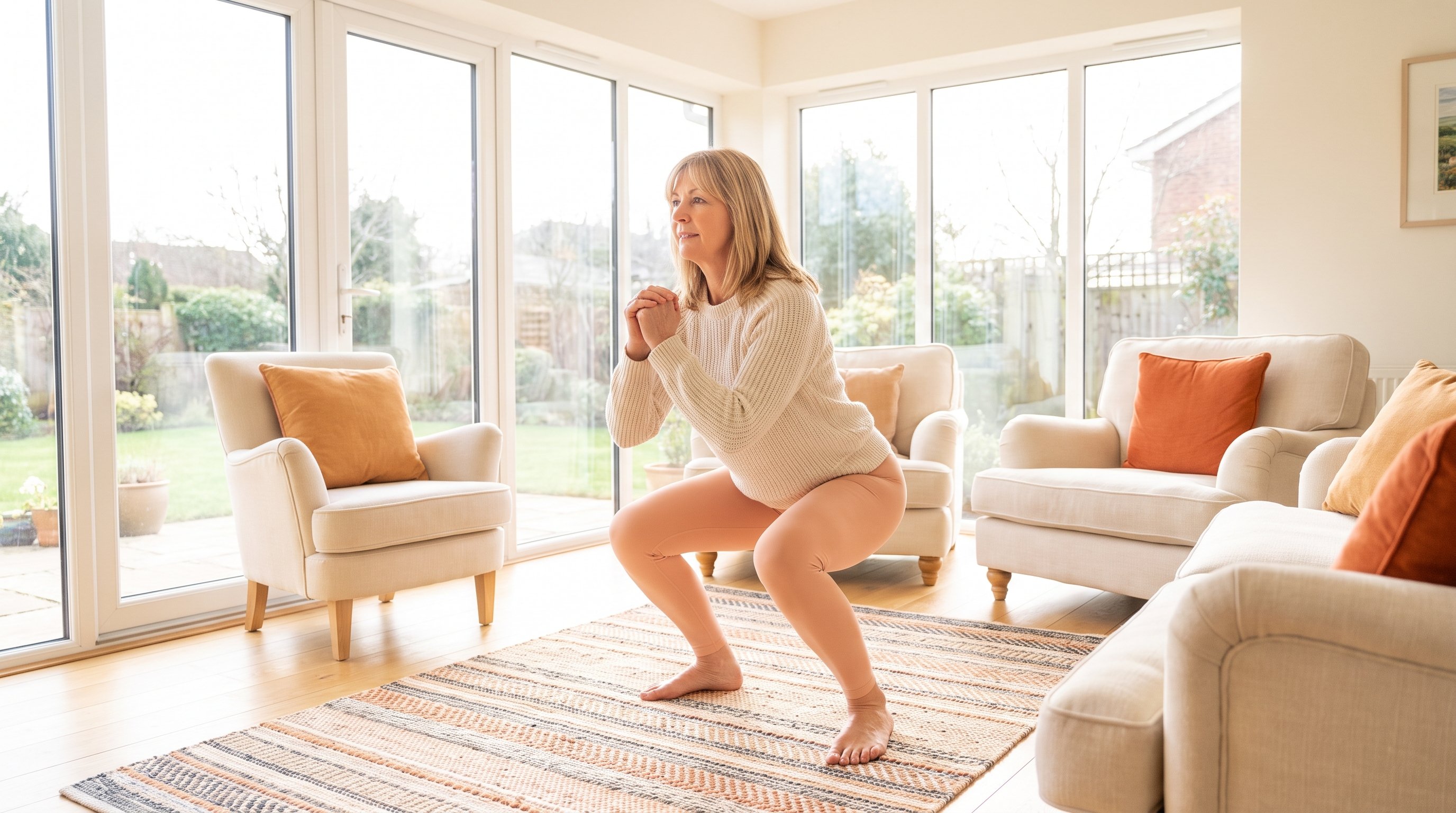
A leg workout at home works because your muscles respond to tension and repetition, not to the postcode of the room you're standing in. Squats, lunges and step-ups load the same muscle groups a gym machine does, just with your own bodyweight doing the work.
The mechanism is simple: push a muscle past what it's used to, give it time to recover, and it adapts by getting stronger. A bare floor and a chair are enough to create that stimulus.
This guide covers whether home leg training actually adds up, how often to do it, where people lose momentum, and how to build a routine that survives a packed week.
Can a Bodyweight Leg Routine Actually Build Strength
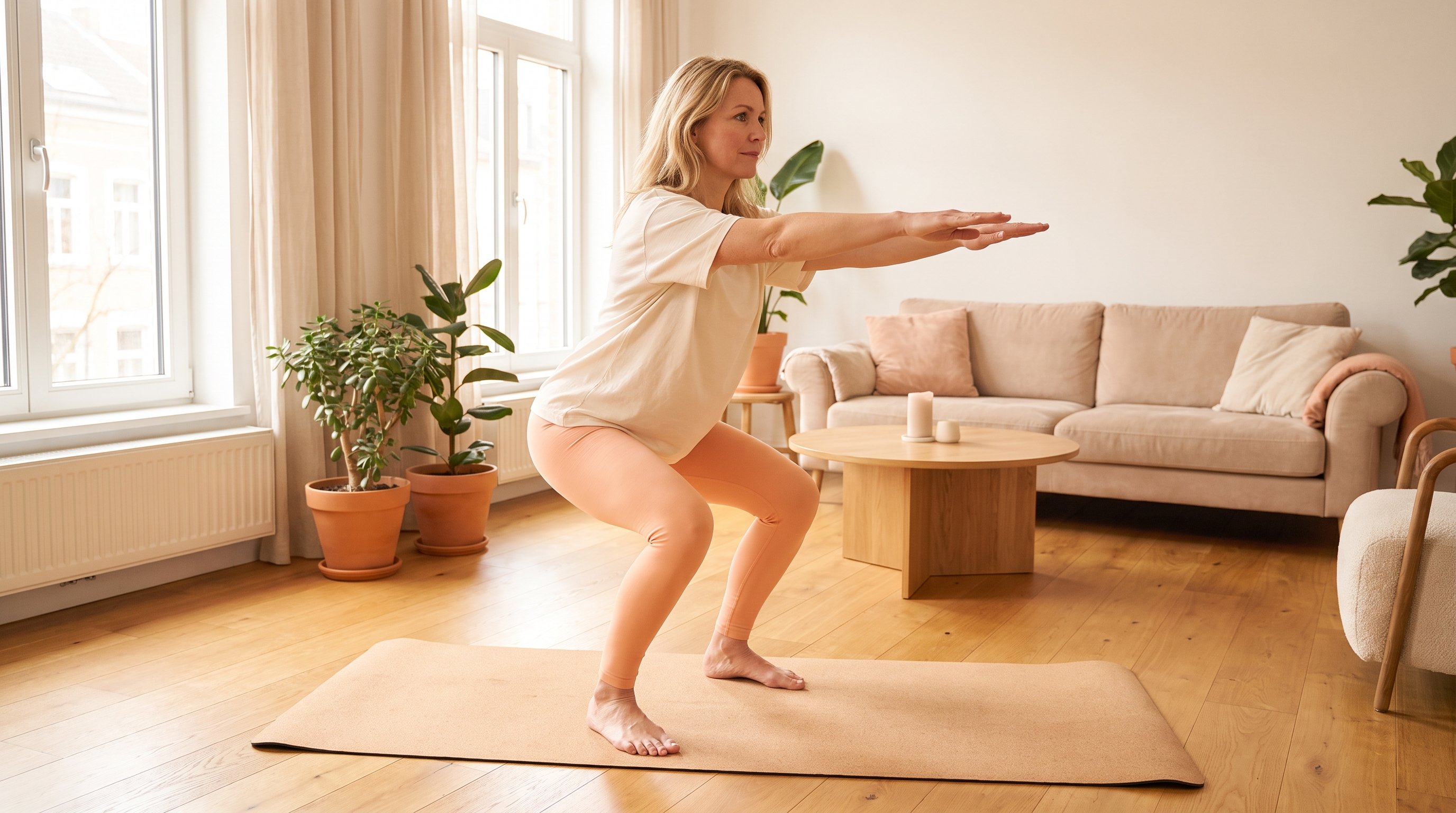
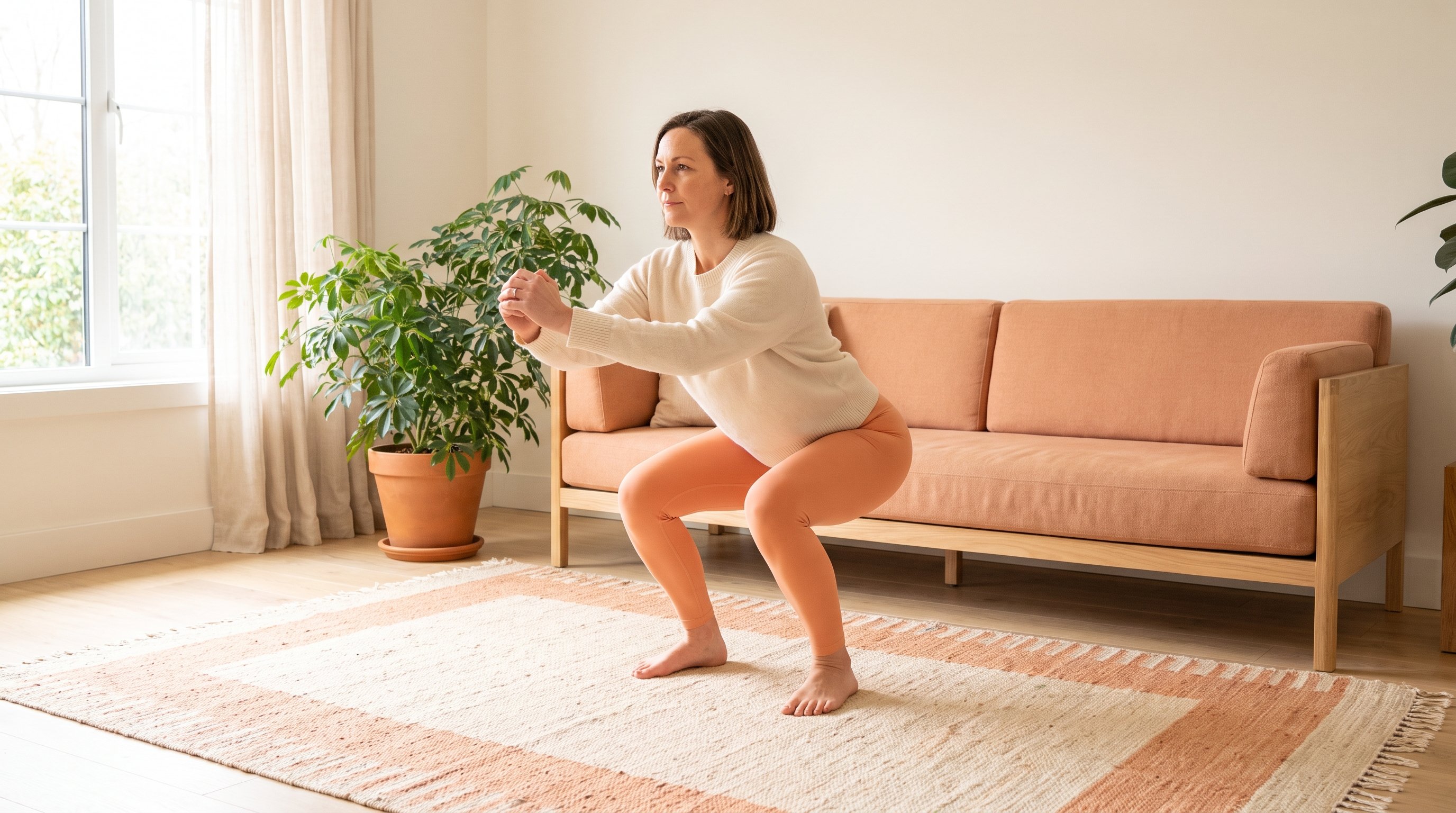
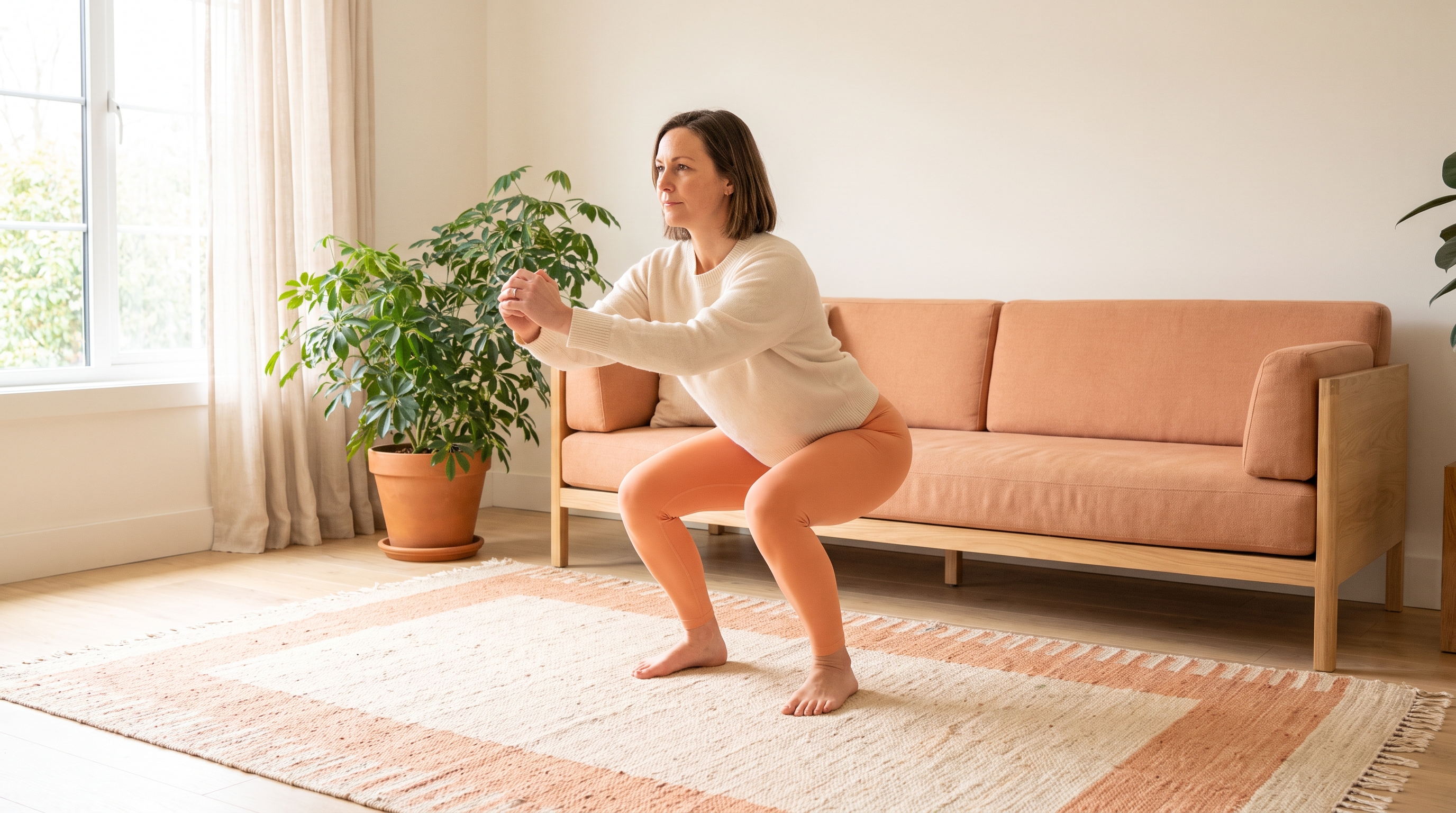
Yes, and the arithmetic behind it is straightforward. A bodyweight squat loads your legs with roughly your own bodyweight each rep; a set of 15 means your quads and glutes handle that load 15 times in a row.
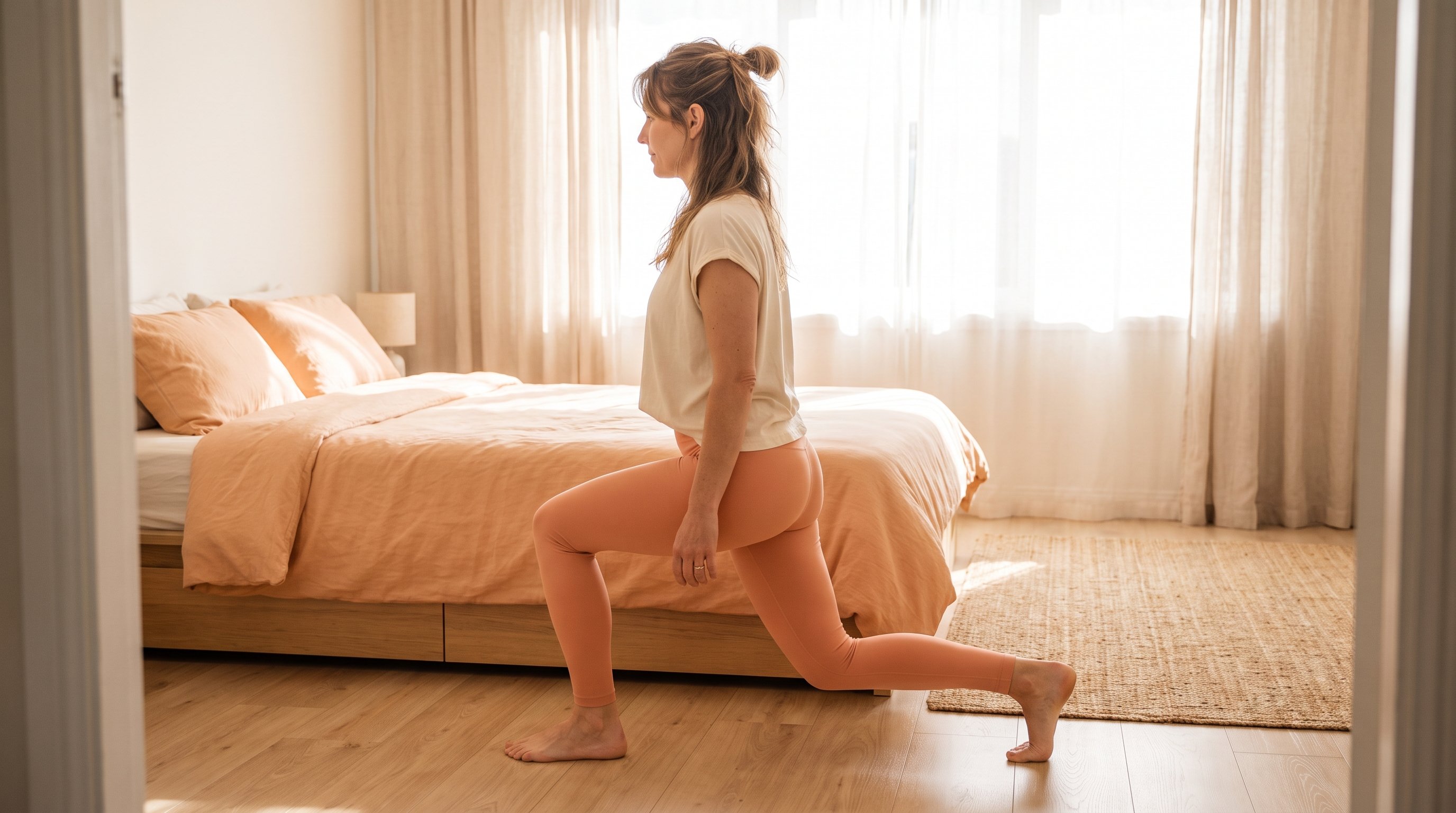
Add a pause, a slower lowering phase, or a single-leg version like a split squat, and the same bodyweight suddenly feels far heavier on each leg individually.
That's the whole trick: you don't need added weight to increase difficulty, you need to change the angle, the tempo, or the number of legs sharing the load.
Over weeks, as the original version gets easier, swapping in a harder variation keeps the stimulus strong enough to matter, without a single dumbbell in the house.
What Makes a Home Leg Session Actually Effective
Two things decide whether a session does anything: which muscles get worked and whether you push them hard enough to notice.
Movement Variety Covers More Ground
Squats hit the front of the thigh and glutes, lunges add balance and a stretch through the hip, and calf raises cover the lower leg that squats mostly skip. Mixing two or three movement patterns in a single session means fewer muscles get left out.
Effort Near the End of the Set Is What Counts
The last few reps of a set, the ones where your legs start to shake a little, are doing most of the work. Stopping well before that point every single time means the muscle never gets a reason to adapt.
How Many Sets and Reps a Week Actually Need
There's no single magic number, but a workable starting point is two to three leg sessions a week, with each session built from three or four exercises done for two to three sets.
Spacing Sessions so Legs Can Recover
Legs are large muscles and they take longer to bounce back than, say, a bicep does, so leaving a day of rest or light movement between sessions usually works better than training them back to back.
| Exercise | Sets | Reps |
|---|---|---|
| Bodyweight squat | 3 | 12-15 |
| Reverse lunge | 2 | 10 per leg |
| Glute bridge | 3 | 15 |
| Calf raise | 2 | 15-20 |
| Wall sit | 2 | 30-45 sec |
Home Leg Training Versus a Gym Leg Day
A gym leg day with a barbell and leg press can load muscles heavier than bodyweight ever will, and there's no pretending otherwise.
But the honest question isn't which one builds more strength on paper, it's which one you'll actually repeat week after week.
A home routine with no commute, no waiting for equipment and no gym membership removes nearly every excuse that causes people to skip a session.
Consistency beats intensity almost every time, and the easier option is the one more likely to still be happening in three months.
Slotting Leg Training Into a Packed Week
Most weeks don't have a spare hour sitting around waiting to be filled, so a leg workout at home needs to attach itself to something that's already happening.
Doing a short session while something's cooking, during a show's ad breaks, or right after getting out of bed removes the need to find extra time at all.
Guided workout libraries include short, simple routines you can drop into a day without planning around them, which makes this kind of attaching easier to actually pull off.
The Myth of Spot-Reducing Thigh or Calf Fat
No amount of squats will specifically shrink fat on the thighs or calves, and no training plan can promise it, because the body doesn't choose where it loses fat from.
Fat loss happens across the whole body based on overall energy balance, not based on which muscle you just trained.
What leg training does deliver is real: stronger muscles, more stable knees and hips, and better capacity for everyday movement like stairs or carrying shopping.
That's a solid outcome on its own, even without the part nobody can honestly promise.
What Actually Decides Your Leg Training Results
A few factors matter more than any specific exercise choice, and they're worth getting right before fussing over the small details.
The Biggest Levers
- Consistency over weeks - one hard session means little, but the same routine repeated for a month starts to show.
- How close to effort you train - sets stopped far short of fatigue barely register as a stimulus.
- Progressive difficulty - staying on the same easy version forever means the body stops needing to adapt.
Where Home Leg Workouts Usually Go Sideways
Skipping Warm-Up Movement Entirely
Jumping straight into squats with cold joints makes the first set feel worse than it should. A couple of minutes of marching on the spot or bodyweight hip circles fixes this.
Doing the Same Three Exercises Forever
Repeating one squat variation for months means other muscles around the hip and lower leg get ignored. Rotating in lunges, step-ups and calf raises spreads the work around.

Stopping the Set Too Early
Ending every set well before the legs feel any fatigue leaves a lot of the benefit on the table. Pushing a little closer to the point where form starts to wobble makes the set count for more.
Training Legs Every Single Day
Daily squats without rest days can leave muscles tired and reduce the quality of each session. Spacing sessions with a rest or light movement day usually produces better sets over time.
Pairing a Leg Routine With Daily Habits
A leg workout at home does more when it's not the only thing happening that day; what you eat and how you track progress both play a part.
Flame Diet brings together a customized anti-inflammatory meal plan, over 100 guided workouts and exercises, and progress tracking tools that keep steps, water and weight in one place, so the workout isn't working alone.
The app's motivating challenges are built for exactly this kind of habit, small and repeatable rather than a one-off burst of effort that fizzles out by week two.
Manage Weight with Personalized Flame Diet
Make it simple with a plan made for you
Making This Your Standard Leg Day From Now On
The simplest next step is picking two days this week and putting a short leg session on both, even if it's just squats, lunges and a wall sit.
Flame Diet can hold that routine alongside the rest of your plan, so the leg work isn't a separate thing you have to remember on top of everything else.
FAQ
Bodyweight training can build real strength and some muscle size, especially for people starting from little to no training. The visible change depends on consistency over months, not any single session.
Weights allow heavier loading, but a home routine that actually gets done every week beats a gym plan that gets skipped. The better option is whichever one you'll repeat.
Ten minutes is enough for three or four exercises done back to back, and a short consistent session beats a long one that never happens. Flame Diet's shorter guided workouts are built with exactly this kind of day in mind.
The body adapts to a fixed routine fairly quickly, so sticking with the exact same moves and reps can stall the stimulus. Adding a harder variation, slower tempo, or extra rep tends to restart progress.
Share this post