Morning Stretches: A Practical Routine to Wake Up Your Body
By:Author:Flame Diet Editorial
Updated on:October 18, 2026
- What a Short Waking Routine Actually Changes
- Stretching at Home Versus a Morning Walk
- Why the Low-Effort Version Beats a Full Flexibility Session
- Adapting the Routine to Where You Are
- Making the Habit Fit a Real Week
- The Myth That Stretching Melts Stubborn Fat
- Building the Habit With Flame Diet's Guided Tools
- Starting Tomorrow Without Overthinking It
A few minutes of gentle movement after you get up loosens stiff joints and gets blood moving before you ask your body to do anything harder. It works because muscles and connective tissue cool and shorten overnight, and slow, controlled movement warms them back up.
There's no mystery ingredient here, just mechanics: moving a joint through its range tells the tissue around it to loosen rather than stay guarded.
This guide covers whether the habit actually does anything, how it compares to other options, who it suits, and how to fold it into a normal week without turning it into another chore.
What a Short Waking Routine Actually Changes
The honest answer is that a short stretching routine changes how your body feels and moves that day, not how much fat you carry or how fast your metabolism runs.
Mechanically, holding a stretch for a short period lengthens the muscle fibre and the fascia around it, which is why a tight hip or stiff shoulder eases off after a minute or two of steady movement.
Do the arithmetic on time: five minutes a day is roughly 35 minutes a week, which is a small slice of a 168-hour week but still enough repetition to make the movement familiar and automatic.
That familiarity is the real win. A joint that moves through its full range daily tends to stay easier to move than one that only gets asked to work once in a while.
Stretching at Home Versus a Morning Walk
Most people weighing up a waking routine are really choosing between two low-effort options: stretching at home for a few minutes, or heading out for a short walk instead.
Both are doable without equipment and both fit before a shower or coffee, but they solve slightly different problems.
| Factor | Stretching Indoors | Morning Walk |
|---|---|---|
| Time needed | 5 to 10 minutes | 15 to 20 minutes |
| Equipment | None | Shoes, outdoor space |
| Main effect | Looser joints, less stiffness | Raised heart rate, fresh air |
| Weather dependent | No | Yes, mostly |
| Easiest to repeat daily | Very easy | Moderate |
Neither one beats the other outright. Stretching wins on convenience, a walk wins on raising your heart rate a bit more.
Why the Low-Effort Version Beats a Full Flexibility Session
The harder alternative is a proper 30-minute flexibility or mobility session, the kind you'd find in a class or a longer video.
It does more in one sitting, but it also asks for more time, more planning and usually a mat on the floor, which is exactly where good intentions stall on a weekday.
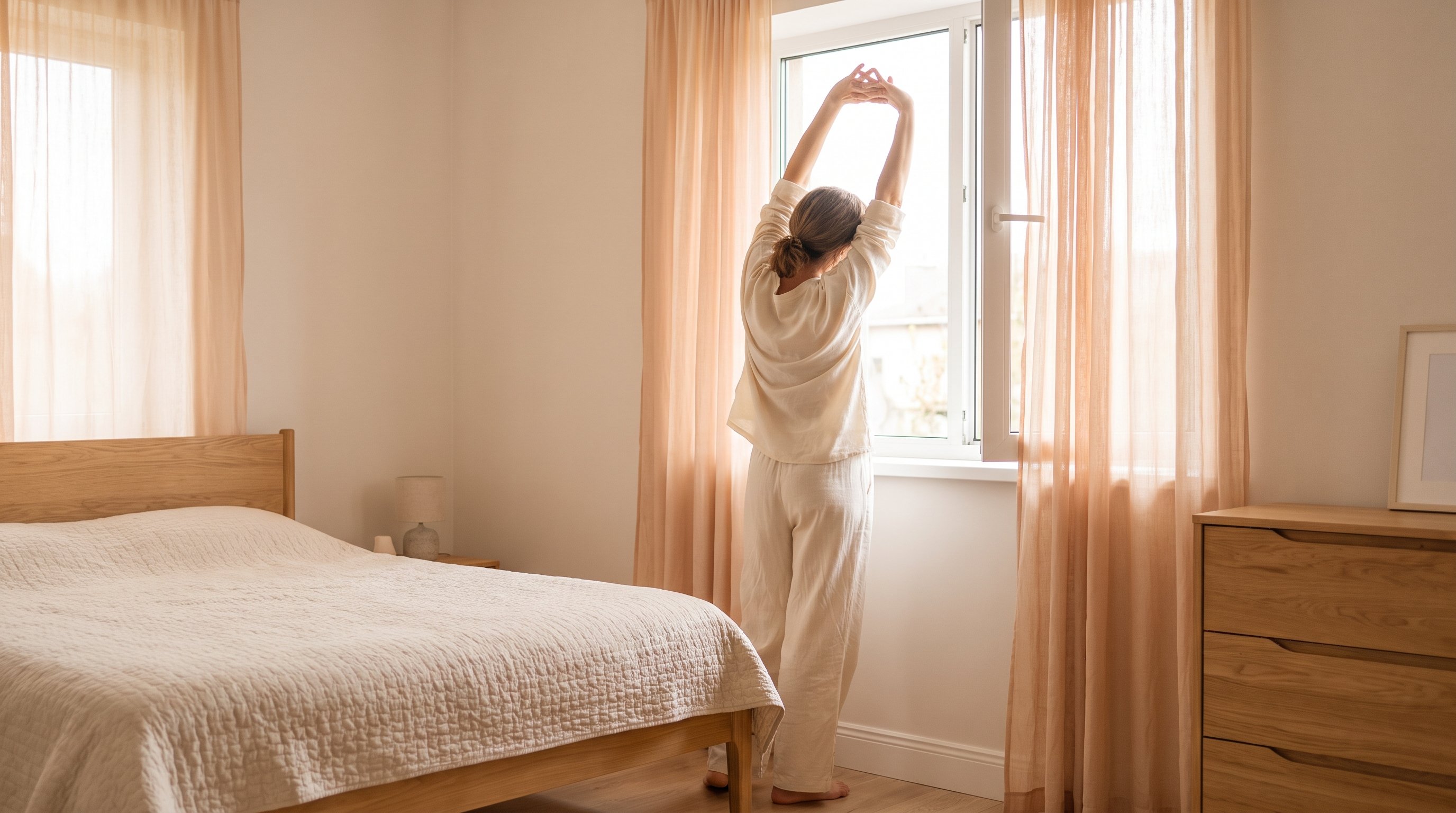
A five-minute version asks for almost nothing. You can do it standing next to the bed, which means there's no excuse good enough to skip it.
Adherence beats intensity here. A short routine done most days adds up to more total movement over a month than a long session that only happens twice before it's abandoned.
Adapting the Routine to Where You Are
The shape of the routine should bend to fit the person doing it, not the other way round.
If You're Just Starting Out
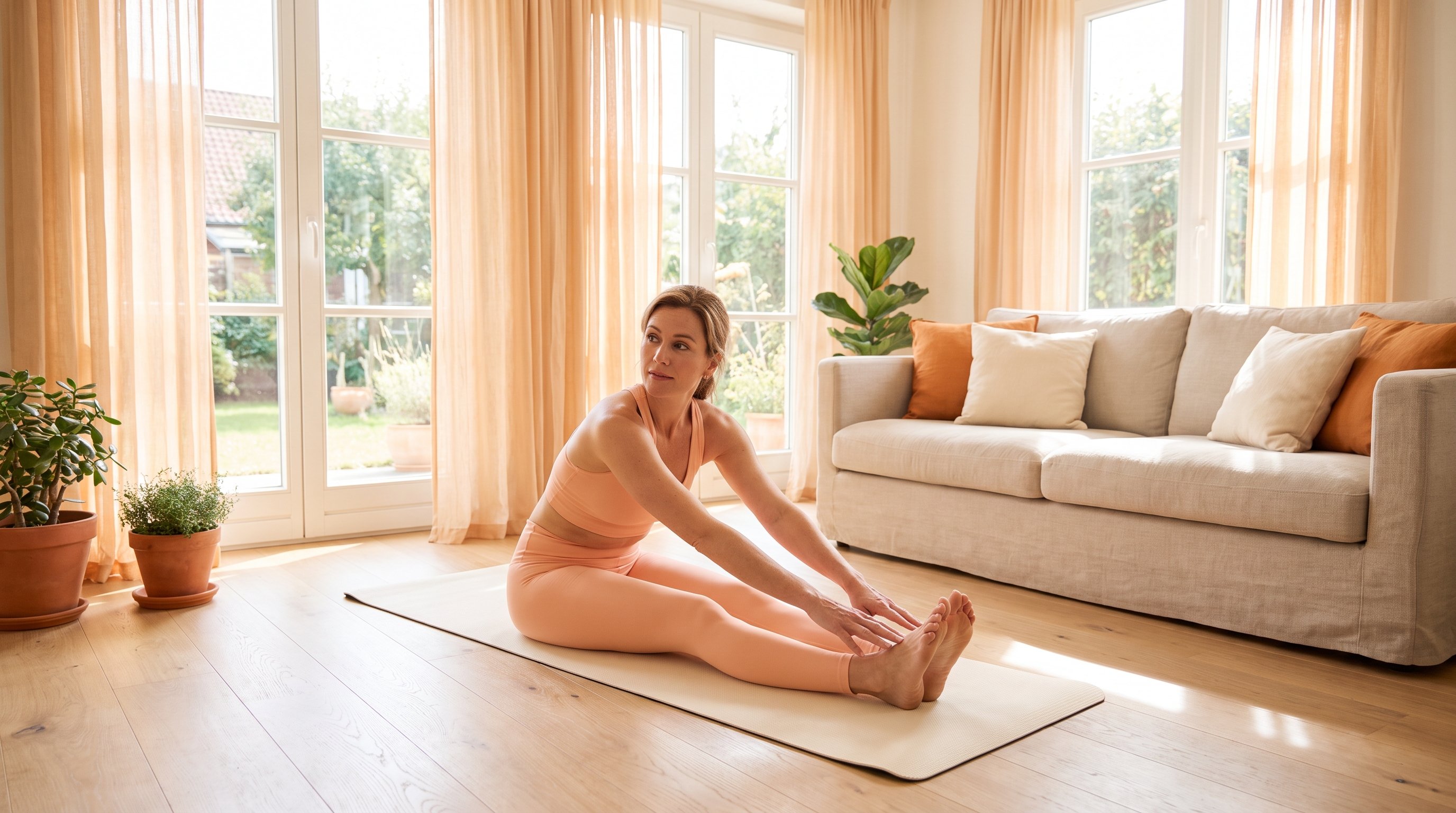
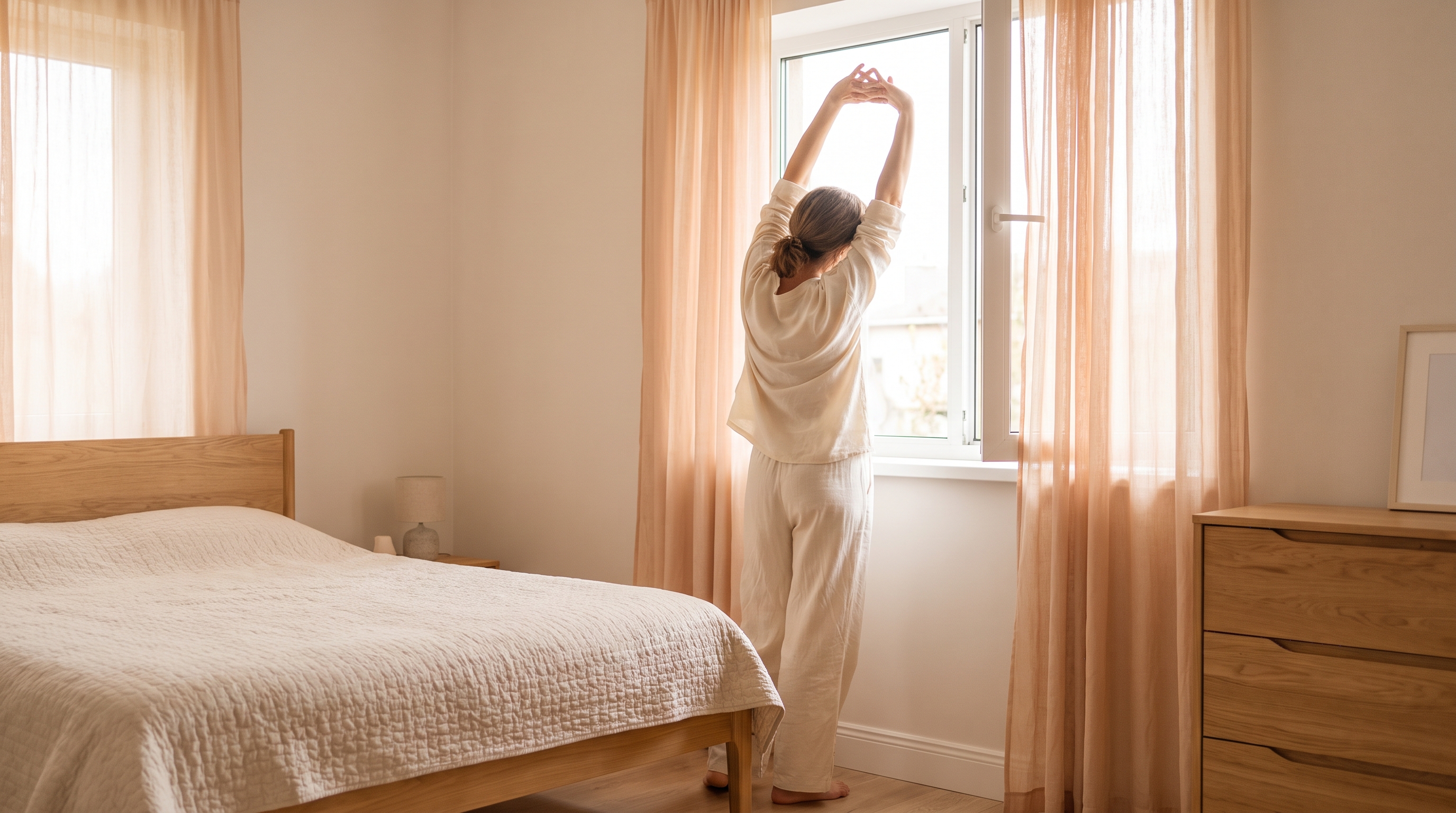
Keep it to three or four simple moves: a neck roll, a reach overhead, a gentle twist and a calf stretch against a wall. Hold each one for 20 to 30 seconds and stop there.

If Mornings Are Already Rushed
Do it in bed before you even stand up. A knee-to-chest pull and a spinal twist while lying down still count and take under two minutes.
If You're Managing Stiffer Joints
Move slower and skip anything that pinches rather than pulls. Shorter holds, repeated a few times, tend to feel better than one long hold pushed too far.
If You Sit at a Desk All Day
Focus on hips, shoulders and the lower back, since those are the areas that stiffen most from sitting. A few minutes undoing that before the day starts makes the first hour at the desk feel less locked up.
Making the Habit Fit a Real Week
The routine only works if it survives contact with a real week, not just a quiet Sunday when you've got time to spare.
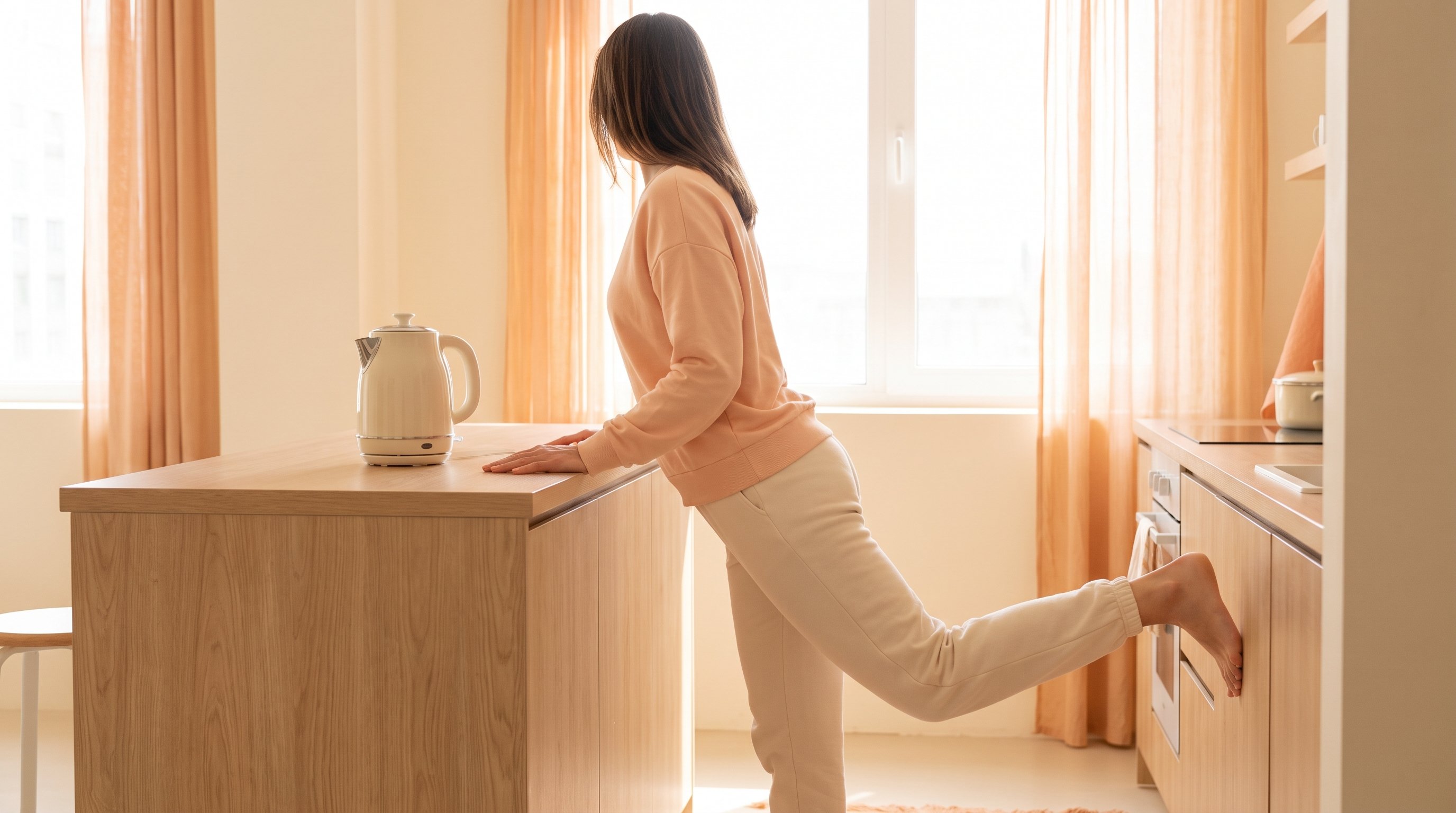
Anchoring it to something you already do daily, like boiling the kettle or waiting for the shower to heat up, removes the need to remember it at all.
A guided workout library includes short routines you can follow along with instead of guessing which stretch to do next, which takes the thinking out of a groggy start.
Pairing that with Flame Diet's app step and water trackers means the rest of your day's movement gets logged in the same place, so the morning routine isn't an isolated habit floating on its own.
The Myth That Stretching Melts Stubborn Fat
Some people hope a waking routine will tighten a specific area or burn off fat from one part of the body. It doesn't work that way, and no honest article will tell you otherwise.
The body doesn't let you choose where it draws energy from, and stretching a muscle doesn't put it under enough strain to change body composition on its own.
What it does do is make movement feel easier, which can make you more willing to stay active across the rest of the day. That knock-on effect matters more than the stretch itself.
Building the Habit With Flame Diet's Guided Tools
Once the routine is in place, the next challenge is keeping it going past the first fortnight.
Flame Diet pairs its guided workouts with motivating challenges, so a short morning routine can sit inside a wider habit rather than standing alone and easy to forget.
The app also brings together a tailored anti-inflammatory meal plan, progress tracking and nutrition guides, so the stretching habit is one piece of a day you're already structuring around food, water and movement.
Manage Weight with Personalized Flame Diet
Make it simple with a plan made for you
Starting Tomorrow Without Overthinking It
Pick three moves, do them before you check your phone, and give it a week before judging whether it's worth keeping.
A structured app can hold the rest of the structure around that small habit, from guided sessions to tracking tools, so the stretch isn't the only thing you have to remember.
FAQ
Not on its own. It supports a day of easier movement, but weight management comes down to the overall pattern of what you eat and how active you are across the whole day.
A few minutes a day sounds minor, but repeated daily it becomes one of the few habits you'll actually keep up, and consistency beats a longer routine you abandon after a week.
Two moves done lying in bed before you get up still count and take under two minutes, so time is rarely the real barrier.
That's usually a sign the routine needs pairing with something else, like tracking it alongside water or steps in Flame Diet, so the small habit feels connected to a bigger pattern instead of floating by itself.
Share this post